1

Pharmacovigilance in Netherlands


How is it with the drug safety system in this land of tulips and clogs? Read our guide to get a clear picture.

And of course, if you feel you need a local consultant, we’re here for you.

Current status of our Dutch pharmacovigilance services:

LCPPV / EU QPPV in Netherlands

AVAILABLE

Easily managed through Tepsivo Platform >

Local Literature Screening

AVAILABLE

Automated monitoring with Tepsivo Literature >

Who is the main PV authority in Netherlands?
RESPONSIBILITY FOR NATIONAL PV SYSTEM

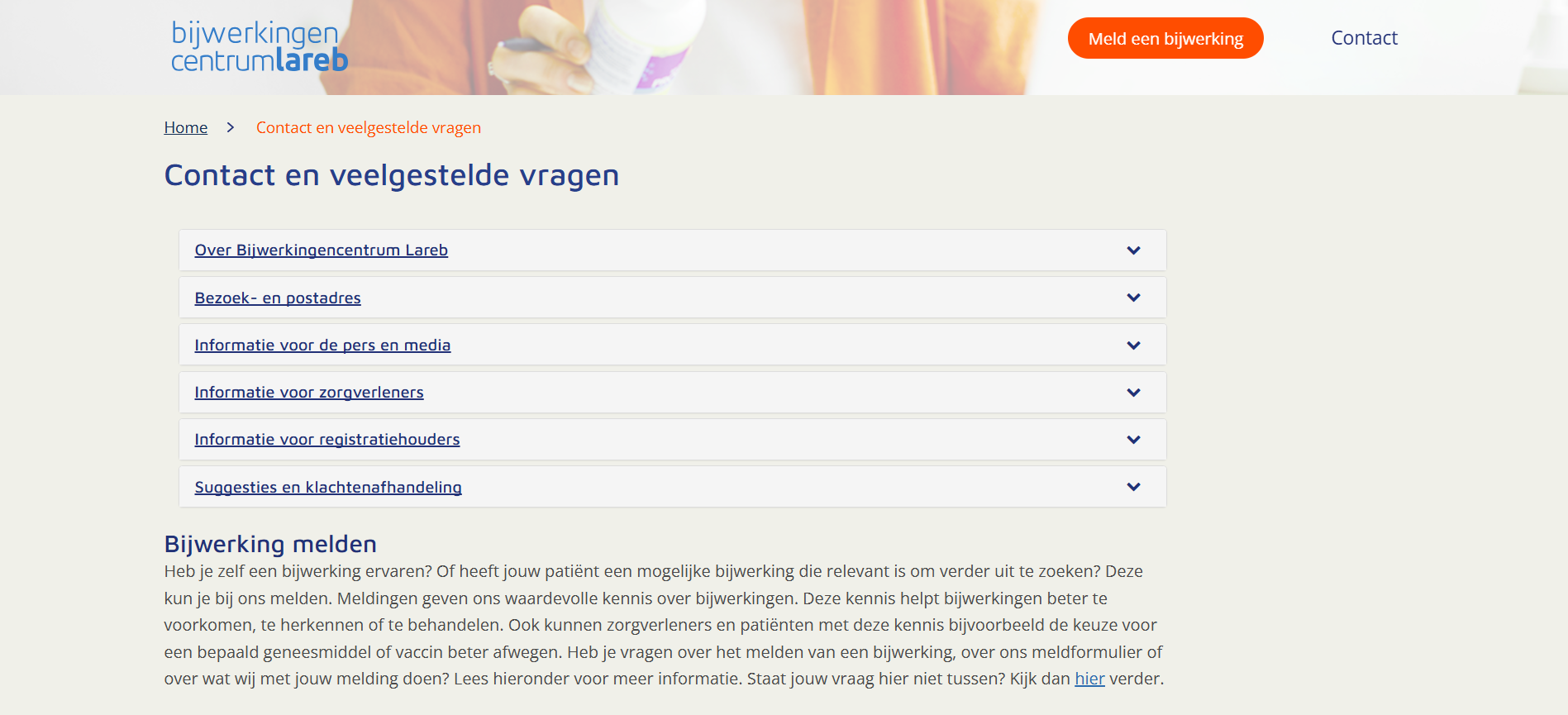
The main authority on pharmacovigilance in the Netherlands is Lareb, under the Dutch National Institute for Health and the Environment’s Center for Adverse Reactions.

Lareb serves as the national pharmacovigilance center, collecting and evaluating information on adverse reactions to medicines and medical devices. There are several regional centers, primarily located in major cities where university hospitals are present such as: Amsterdam, Rotterdam, Leiden, Utrecht.


KNOWLEDGE CENTRE FOR ADRs

The Netherlands Pharmacovigilance Centre Lareb also identifies risks related to the use of medicines in everyday practice and serves as the Knowledge Centre for adverse drug reactions (ADRs).

These are communicated to and evaluated by the Dutch Medicines Evaluation Board (CBG/MEB). This board assesses the safety, efficacy, and quality of medicines and medical devices before they can be marketed in the Netherlands.


Useful insights about the authority website
CONTENT IN ENGLISH

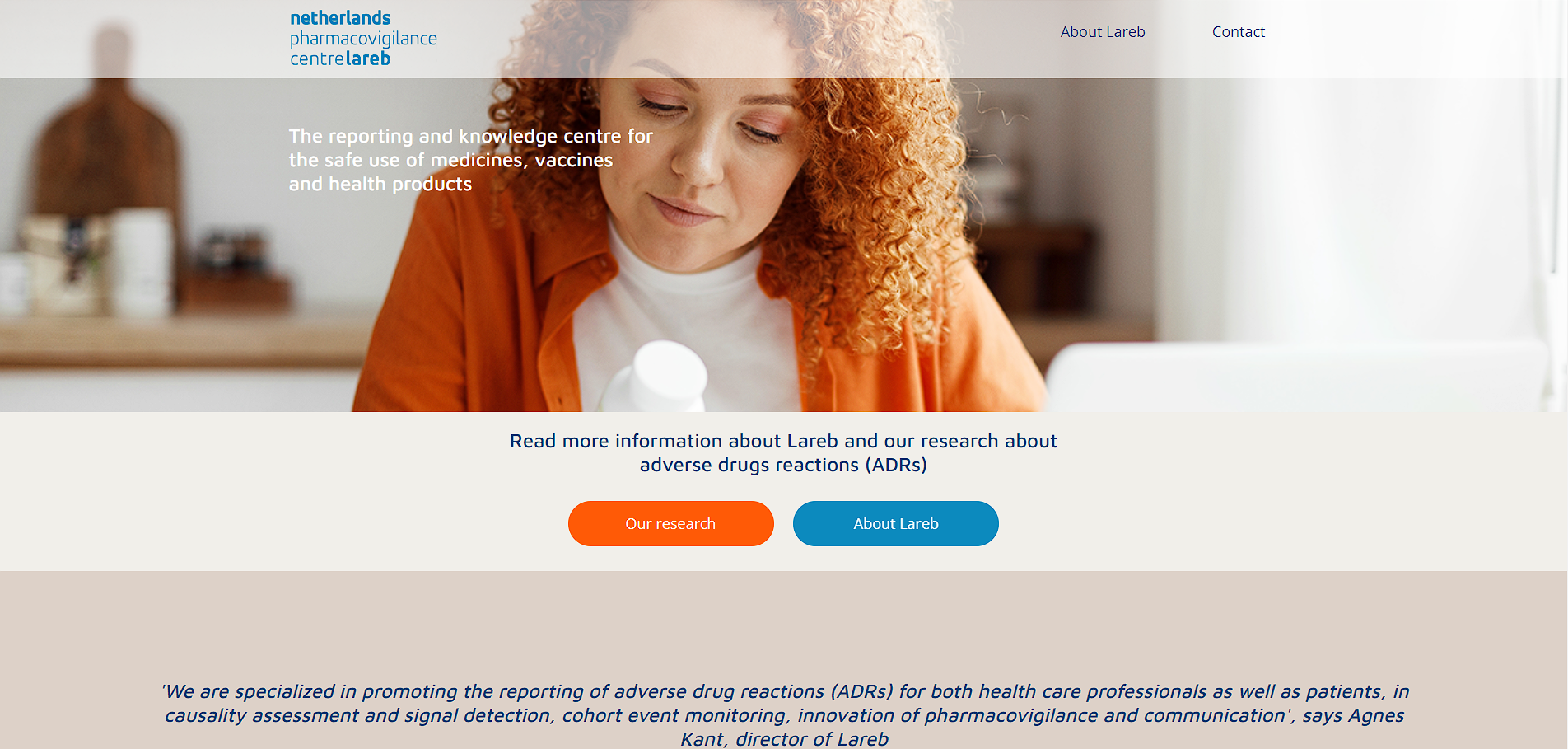
Both Lareb and MEB website have an English version. However, Lareb’s is quite simplified and many pages lack translation. MEB website should have all important pages regarding pharmacovigilance translated.

If you’re struggling to locate the information you need, we suggest exploring the Dutch version of the website and utilizing online translation tools like Google Translate, as this may assist you in uncovering the details you seek.

Interesting websites sections related to pharmacovigilance
SIDE EFFECTS OF MEDICINE

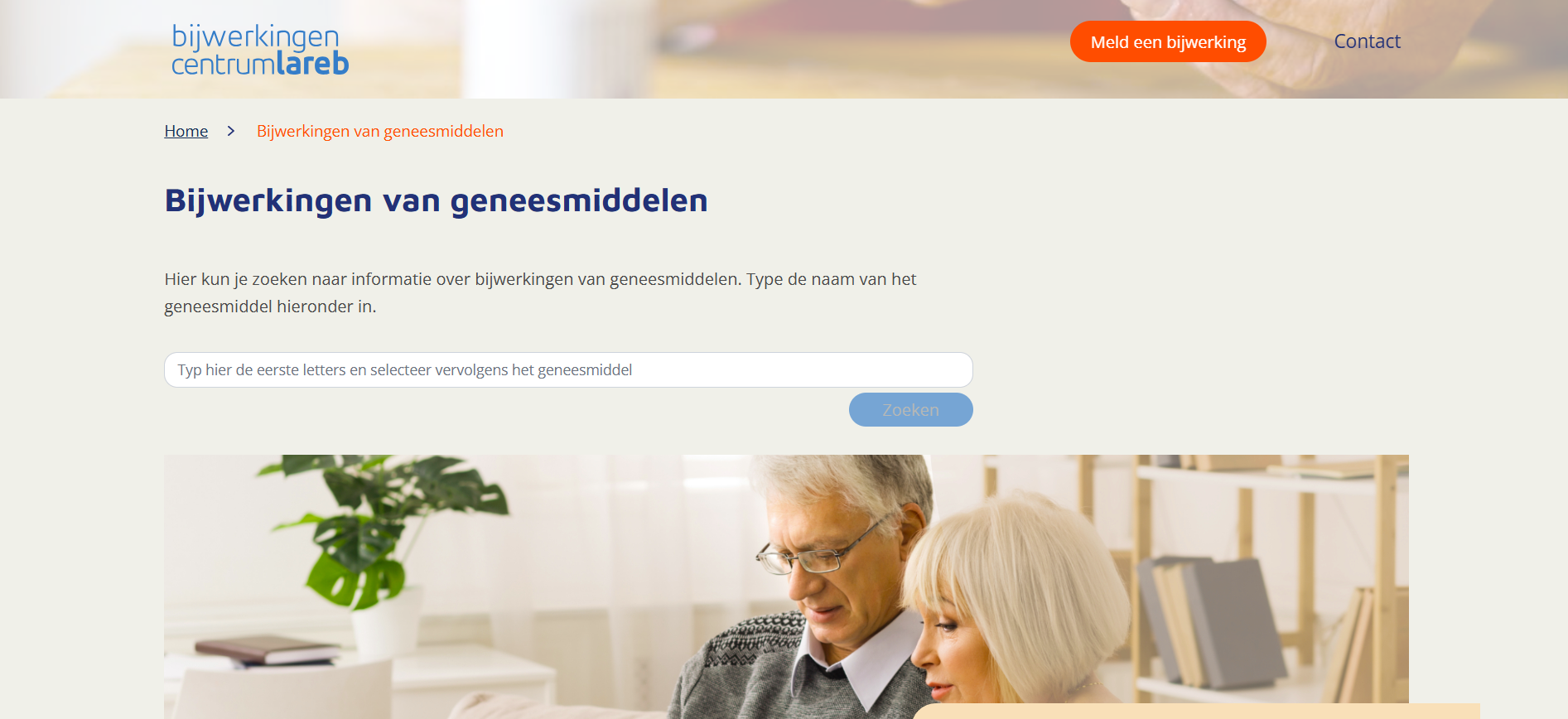
This is a really handfull page, when you enter the name of the medicine placed on the Dutch market (and confirm in the list), you’ll find not only important side effects, but also news, publications & reports and information from toher sources.

Visit the section >

INFORMATION AND F&Q

Vast section with many answers, there is really big chance, that yours here as well. The F&Q is divided into 6 main section presented at the top of the page, each including some links, that act as clickable links to a specific part of the page. When you just keep scrolling you’ll find the section you’re interested in anyway. This page also includes information about reportindg ADRs

Visit the section >


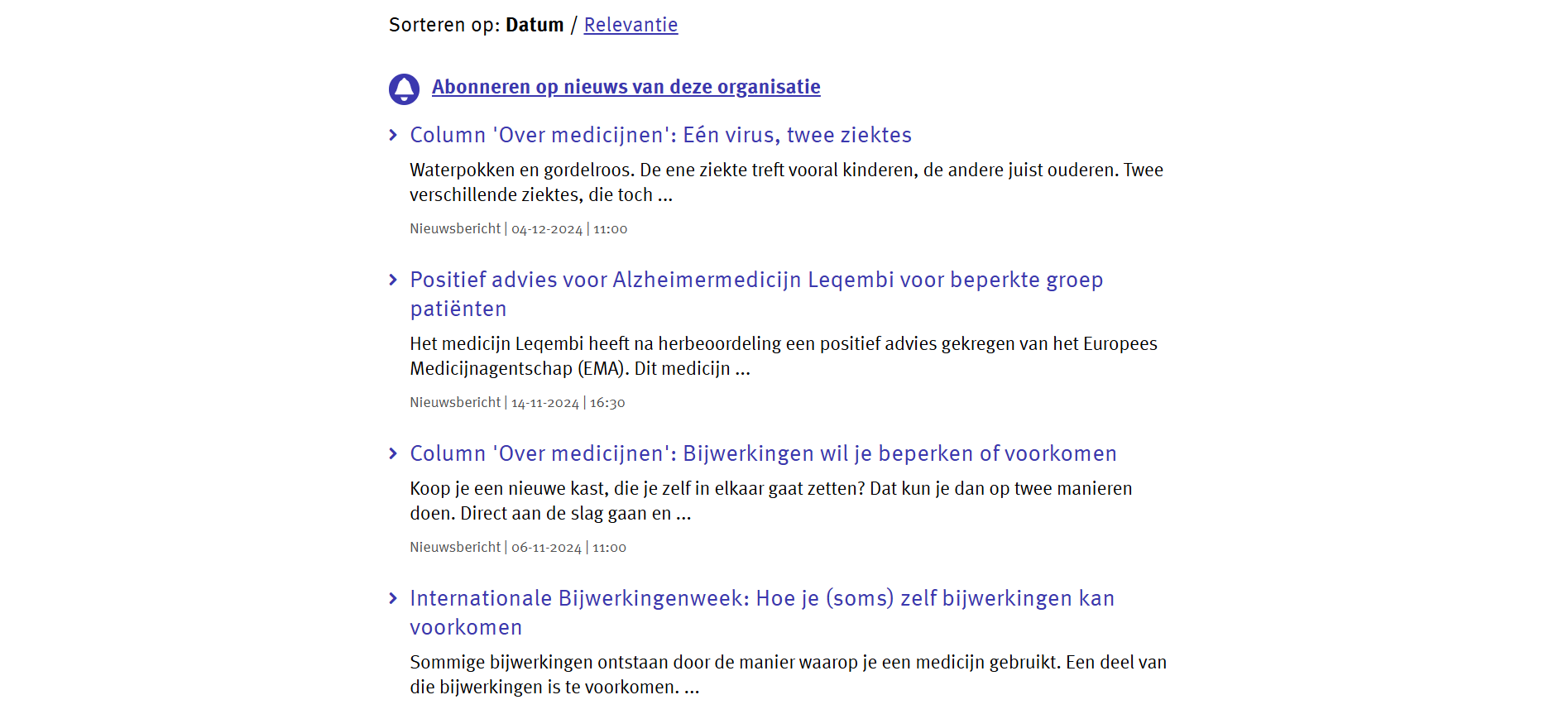
MEDICAL NEWS

It features a variety of articles and news items focused on health and medicine, you can expect to find insights on managing side effects, information about recent drug shortages, and discussions about how pharmacovigilance can improve public health, information about drug shortages etc.

Visit the section >

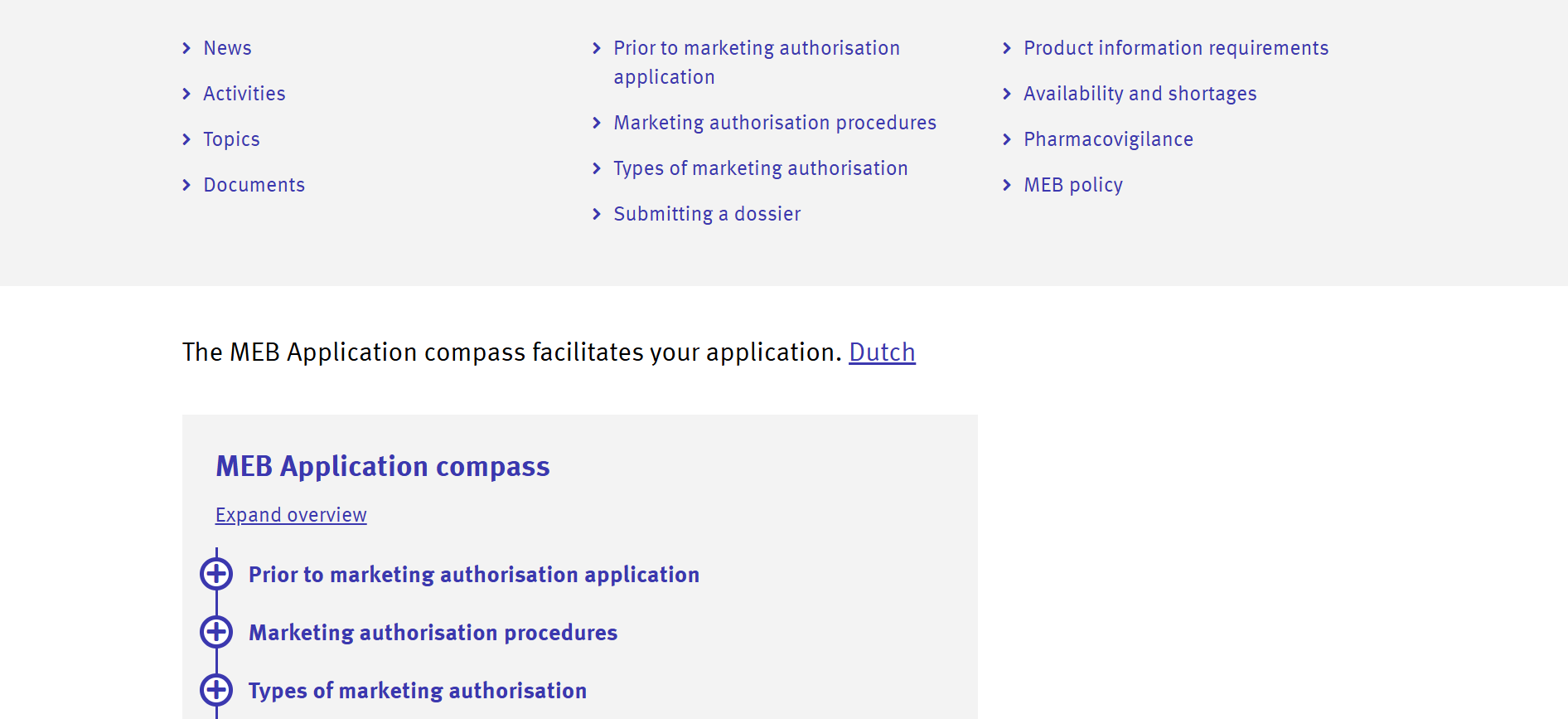
MARKETING AUTHORISATION

This page is basically a huge singpost that directs you further into more specific way. Such as Pharmacovigilance, where you can find information regarding PSUR, National contact person and more, Marketing authorisation procedures or Documents, including information on regulatory changes, guidelines for applicants, safety communications, and the legal status of drug supply and more.

Visit the section >

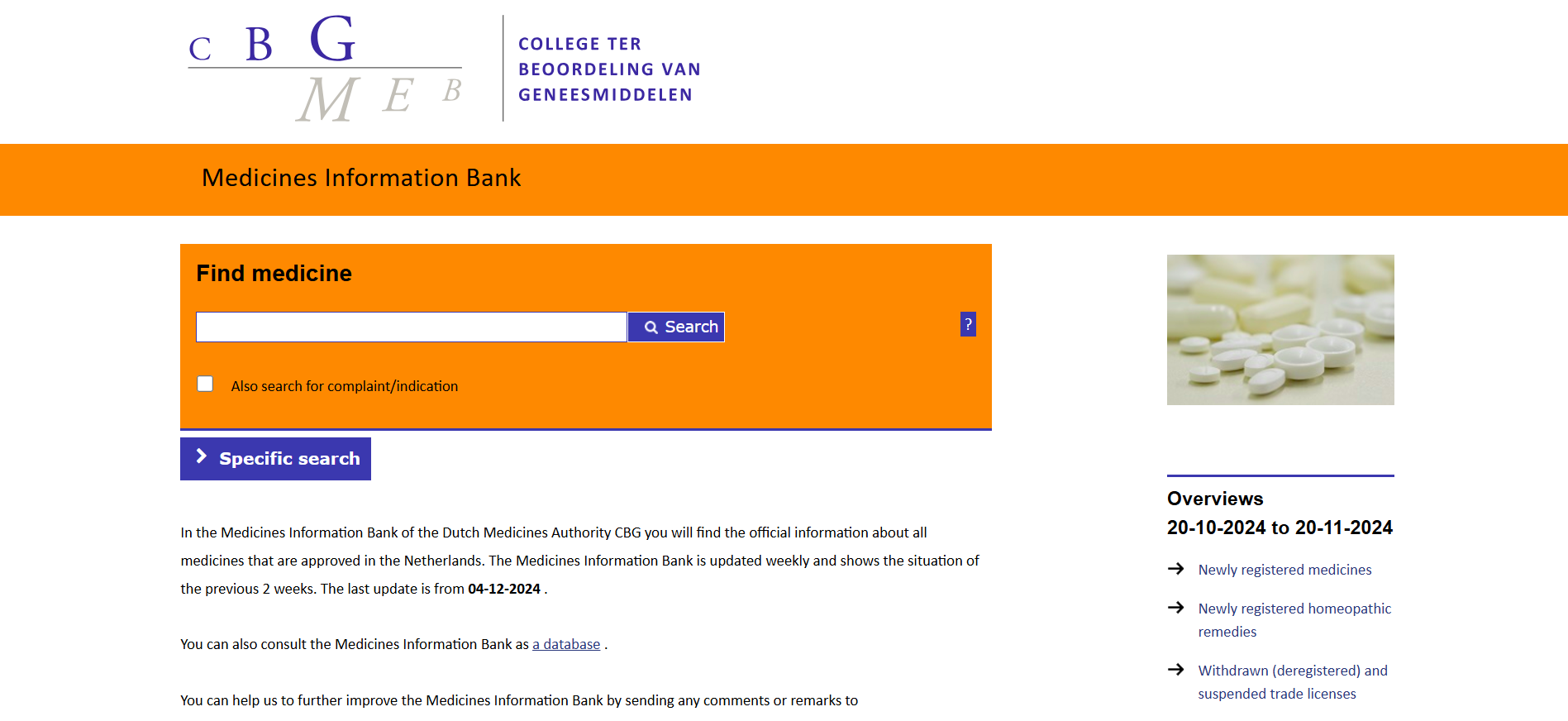
FIND A MEDICINE

This is a go-to source for official information about all medicines approved in the Netherlands. Regularly updated, it provides essential details on how to use these medications safely and effectively.

Visit the section >


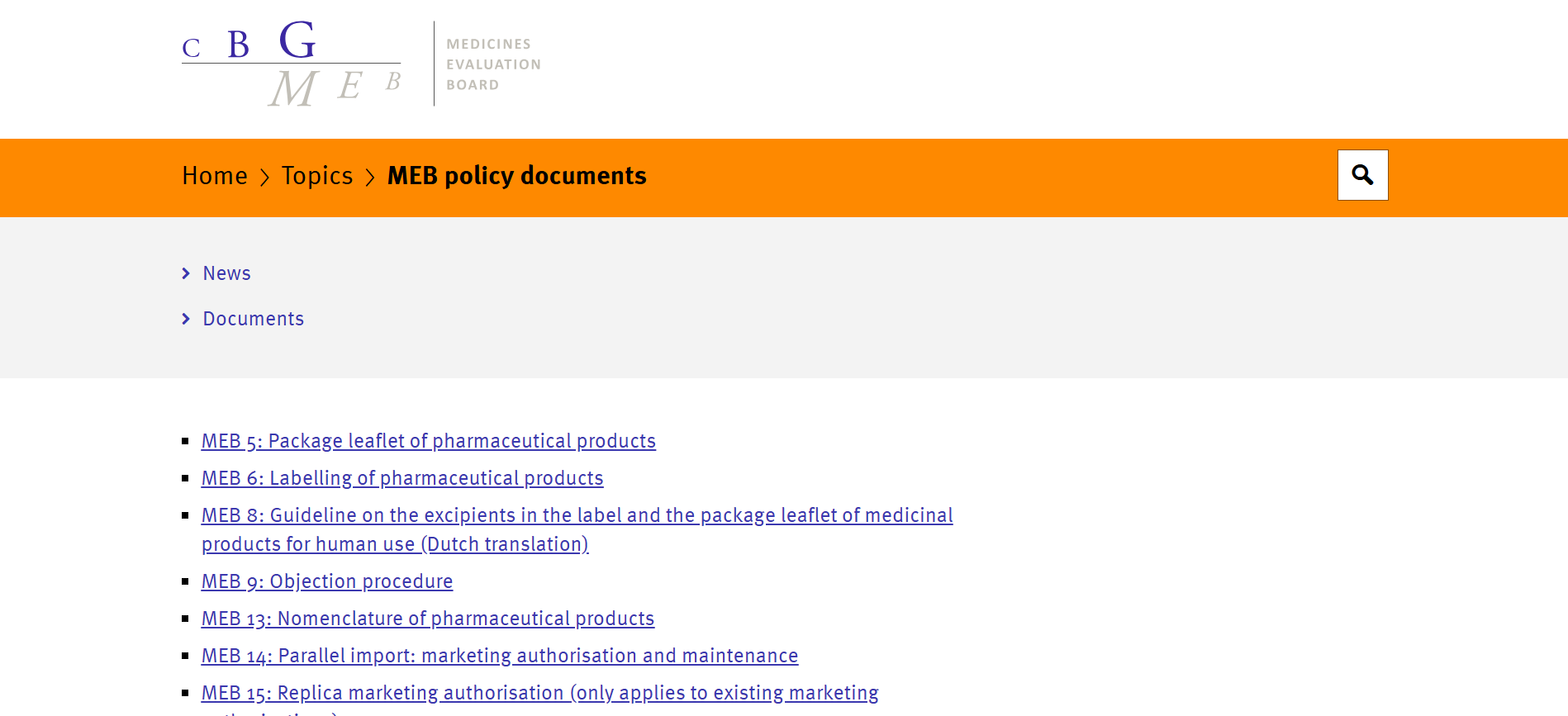
MEB POLICY DOCUMETS

The page outlines a series of documents and guidelines from the Medicines Evaluation Board (MEB) related to the regulation and approval of pharmaceutical products in the Netherlands, as it seems everything can be downloaded, in English too.

Visit the section >

Other important institutions & industry groups
MINISTRY OF HEALTH WELFARE & SPORT (VWS)

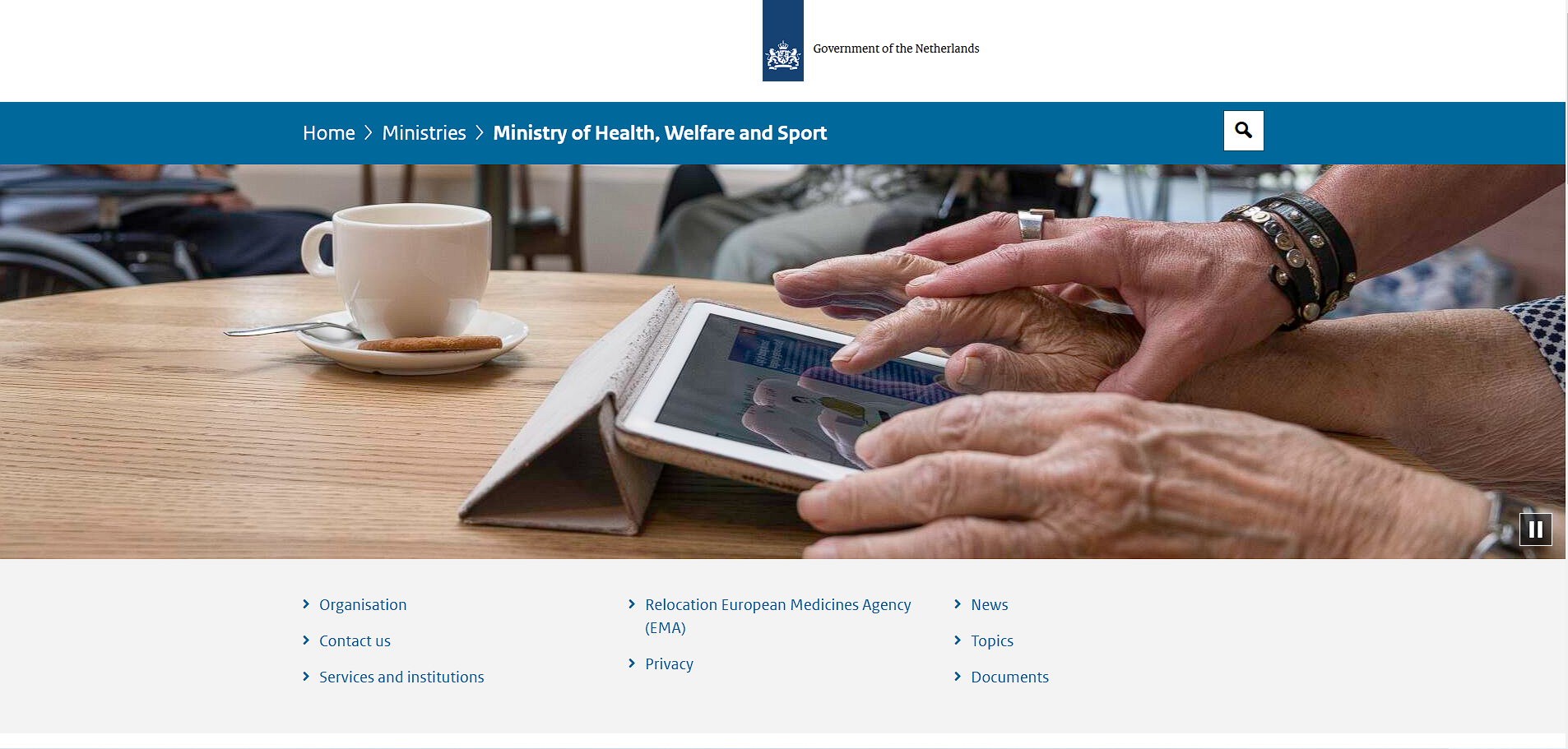
Key governmental body in the Netherlands responsible for public health, healthcare, social welfare, and sports. The VWS is committed to improving the health and quality of life for all citizens. The ministry also oversees the regulation of pharmaceuticals and medical devices, ensuring their safety and effectiveness.

With the updated VWS monitor the Ministry is set to gain a clearer picture of the current state of healthcare in the Netherlands as do you since you can downloaded as well (scroll down a bit to section “Documents”). Here is also overview of all key figures, such as Antibiotic use in hospitals or Medicines: use prescribed drugs for example (the list is sorted alphabetically). We’ll also provide you with a link, where all general information about medicines can be found here, other topic regarding health are accessible here.

Ministry’s website: https://www.government.nl/ministries/ministry-of-health-welfare-and-sport

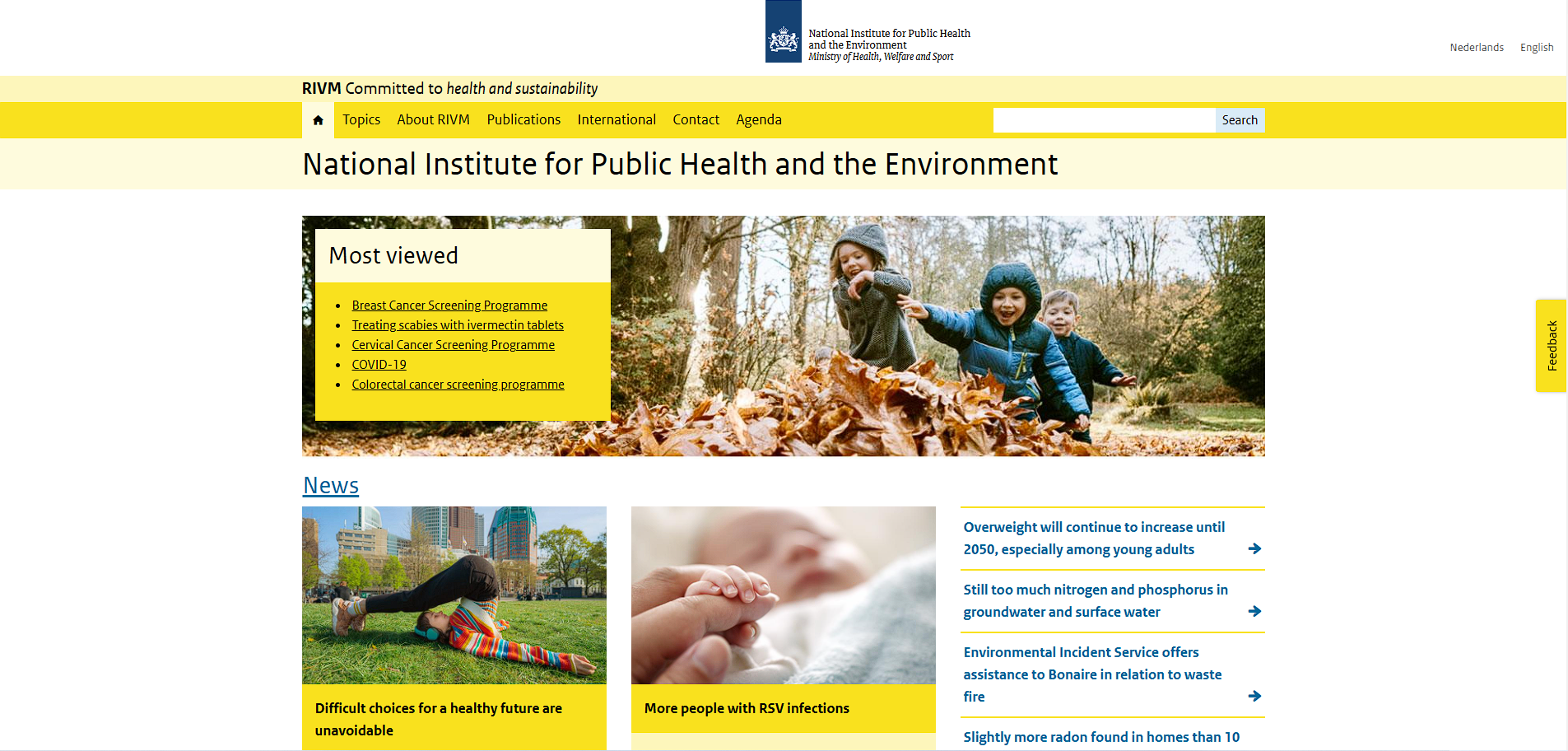
NATIONAL INSTITUTE FOR PUBLIC HEALTH & THE ENVIRONMENT (RIVM)

This institute plays a crucial role in public health monitoring, disease control, and health promotion. It conducts research and provides data and advice to the government on public health issues.

Vast section of publications awaits you, it counts over 35 000 articles and reports, some are accesible in English, but vast majority is in Dutch only. You can filter it by year, type (article or report) or search for some particular term, sadly you cannot do it by language. Then there is also section dedicated to Medicines for humans, where you can find general information or some regaridng environment or European Pharmacopoeia for example.

RIVM’s website: https://www.rivm.nl/en

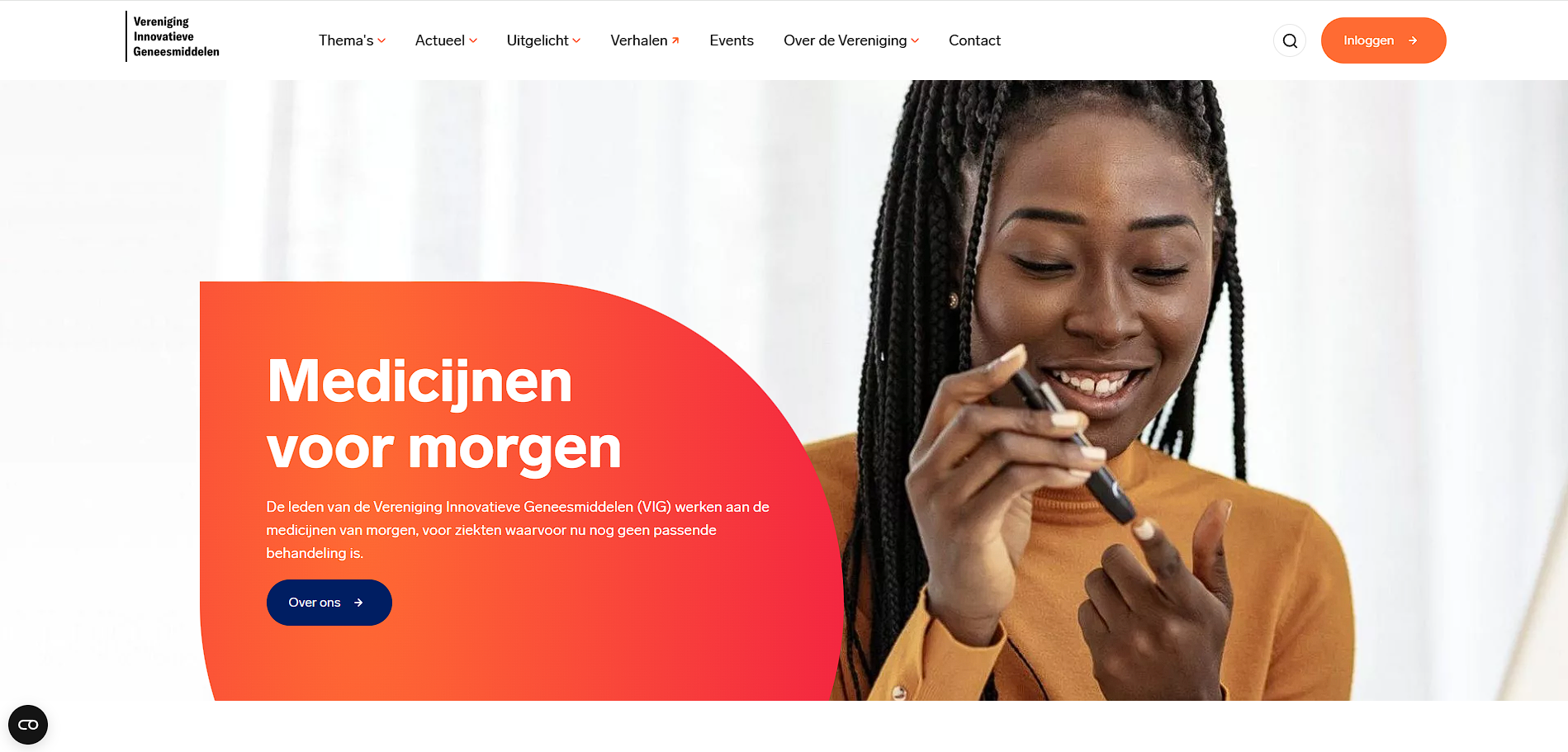
VERENIGING INNOVATIEVE GENEESMIDDELEN (VIG)

The association represents research-based pharmaceutical companies in the Netherlands. It advocates for policies that support innovation in the pharmaceutical industry.

You can visit their publications section, which counts few tens of them, most of them are only in Dutch, but some are also in English, such this one with interesting title – “Medicine myths – and their consequences for the Dutch patient”, the publications can be donwloaded, but you need to fill in you e-mail. There is also possibility to subscribe to their newletter to stay in the picture, you can also see the archive on the linked page, previous numbers included topics such as New Alzheimer’s drug, New European Research or Medical prevention.

VIG’s website: https://www.vereniginginnovatievegeneesmiddelen.nl/

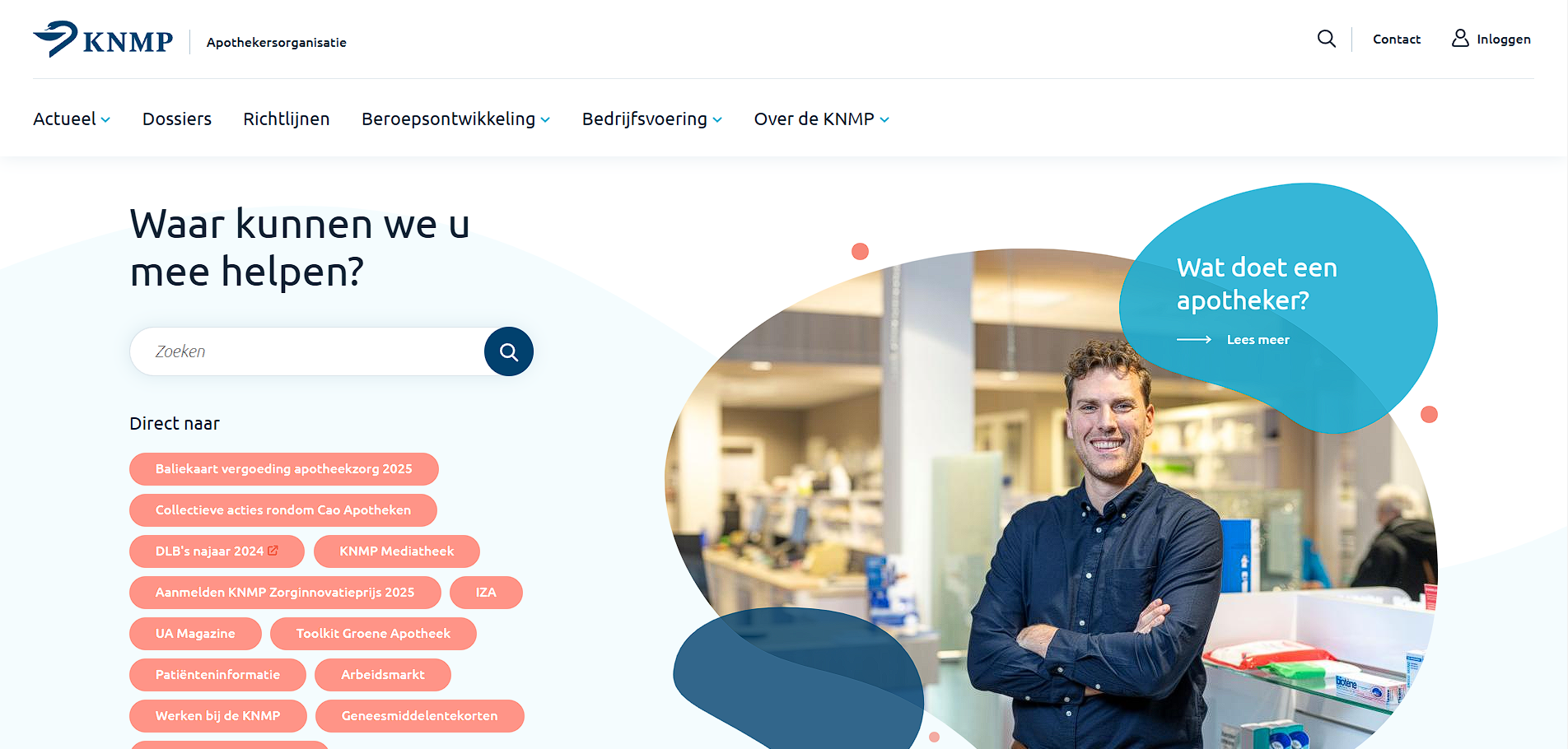
KONINKLIJKE NEDERLANDSE MAATSCHAPPIJ TER BEVORDERING DER PHARMACIE (KNMP)

The Royal Dutch Pharmaceutical Society represents pharmacists in the Netherlands. It works with the government and other stakeholders on issues related to pharmaceutical care.

This website and thus basically all content is for pharmacist, there is a vast Media Library, offering photos, videos and more. For instance there is a section dedicated to drug shortages, which includes video for stakeholders and patiens. You can also read more about their vision called “Prevention by the public pharmacist”, see guidelines and read UA Magazine, if you’re interested, though its mainly for pharmacy assistants. Furhtermore, there is nicely processed section including all the important legislation.

KNMP’s website: https://www.knmp.nl/

Some of the most important laws

Basic legislation

Medicines Act (Geneesmiddelenwet)

This act lays down rules for the safe use of medicines, including requirements for reporting serious side effects by doctors and pharmacists.

Besluit Geneesmiddelenvoorziening (Decision on the Provision of Medicines)

This royal decree outlines the framework for the provision and management of medicines, including aspects related to their safety and efficacy.

    Guidelines

    Good Pharmacovigilance Practice (GVP) Modules

    The GVP modules, developed by the European Medicines Agency (EMA), provide guidelines on the implementation of pharmacovigilance activities.


    Essential EU Legislation and EMA Guidlines

    Since Netherlands is a member of the EU, every Marketing Authorization Holder with a product on the Dutch market needs to follow the European pharmacovigilance legislation and guidelines by EMA (European Medicine Agency).

    To navigate through the European regulations, its is useful to know following:

     EMA Pharmacovigilance System Manual
     Directive 2001/83/EC
     Regulation (EC) 726/2004
     Commission Implementing Regulation (EU) 520/2012
     

    Local pharmacovigilance specifics

    Useful abbreviations to know

    If you want to study local materials about pharmacovigilance in Netherlands, following terms will be helpful for you to get familiar with:

    EMA (European Medicine Organization)
    → Key part of the EU, dedicated to ensuring the safety and effectiveness of medicines.

    EVPM (EudraVigilance post-authorization module)
    → Dedicated to the collection of ICSRs related to all medicinal products authorised in the EEA.

    PRAC (Pharmacovigilance Risk Assessment Committee)
    → Committee responsible for assessing and monitoring the safety of human medicines

    CBG (College ter Beoordeling van Geneesmiddelen)
    → Medicines Evaluation Board / It assesses the safety, efficacy & quality of medicines.


    Is LCPPV needed or is EU QPPV enough?

    Only if the EU Qualified Person for Pharmacovigilance (QPPV) resides outside the Netherlands or does not have proficiency in the Dutch language, then a Local Contact Person for Pharmacovigilance (LCPPV) is required in the Netherlands.

    As the requirement for this pharmacovigilance contact person at national level is not specified in the Dutch legislation, the Health Care Inspectorate and Dutch Medicines Evaluation Board have outlined a general guidance for such a person.

    If you need a translation of those instructions or more information about LCPPV requirements in Europe in general, just check our free comprehensive guide available here.

    Let us appoint LCPPV for you >

    How can be adverse events reported in Netherlands?

    If you are a marketing authorization holder, you are legally obliged to report ADRs to the Medicines Evaluation Board (CBG) through the EudraVigilance database.

    If you are a patient or a healthcare professionals, you can also report ADRs to Lareb. The reporting process is similar, and you can use the online form provided on their website.

    More information here.

    Local medical journals to screen

    Here are few examples of Dutch local literature sources that medical authorization holders should monitor:

    NEDERLANDS TIJDSCHRIFT VOOR GENEESKUNDE (NTvG)

    One of the world’s oldest medical journals, established in 1857, and it focuses on disseminating medical knowledge among Dutch practitioners through peer-reviewed articles.

    Its unique emphasis on reviews and commentaries makes it an essential resource for understanding current medical practices and research developments in the Netherlands.

    ISSN: 1876-8784

    Check journal website >

    MEDISCH CONTACT

    It serves as the primary journal for Dutch physicians, providing a platform for discussion on medical practice, policy, and education.

    Its unique feature is its focus on the intersection of medicine and societal issues, making it a vital read for those interested in the broader implications of healthcare.

    ISSN: 1875-8460

    Check journal website >

    PHARMACEUTISCH WEEKBLAD

    The leading journal for pharmacy professionals in the Netherlands, offering insights into pharmaceutical science, practice, and policy.

    Its unique contribution lies in its focus on the latest developments in drug therapy and pharmacy practice, essential for pharmacists looking to stay informed.

    ISSN: 2352-9261

    Check journal website >

    GENEESMIDDELENBULLETIN

    A critical journal that provides independent information about medications and their use, aimed at healthcare professionals.

    Its distinctive approach involves evaluating new drugs and treatments based on evidence-based criteria, making it an invaluable resource for informed prescribing.

    ISSN: 2589-1782

    Check journal website >

    Rather then spending your budget for hours of repetitive manual work to monitor those sources, we recommend to simply automate this task using our Tepsivo Literature solution.

    Learn how to screen automatically >

    Other interesting resources

    Country Public Health / Health System Assessments

    Netherlands: Country Health Profile 2023

    The 2023 edition of “State of Health in the EU: Netherlands” provides a comprehensive look at the health landscape in the country, exploring key topics such as overall health status, important health determinants and risk factors, and how the health system is organized and funded.

    Publications by Lareb

    Annual reports

    As it seems the Lareb’s annual reports do not have its own section on the website, so we recommend to search it manually, when searching use “Jaarverslag”. Here is Annual report 2023, only in Dutch.

    Publications and overviews

    Some publication are only in Dutch, some are in English. There are many categories of publications & overviews like drug safety, pharmaceuticals or some articles from magazines and journals.

    Newsletter

    You can subscribe to their newsletter, though it seems the information about what you’ll receive is missing.

    News Updates

    Archive of news that have mainly informative character.

    Publications by MEB

    Annual reports

    MEB might have its own section for annual reports (though probably only when using Dutch version), but the easiest way to find those still searching it manually, when doing so use “Jaarverslag” and year you’re interested in. Here is from 2023.

    News

    As it is with the Lareb news section, MEB section that have mainly informative character.

    Newsletter

    Though its called “e-mail services”, it is basically newsletter. By subscribing, you’ll receive news and new documents, you can even choose specific subject from which you’d like to receive those and you can also choose the frequency, detailed guide is on the linked page.

    OTHER interesting resources

    Health and Youth Care Inspectorate (IGJ): Pharmacovigilance

    This is a quick article about supervision and inspections from IGJ.

    Government of the Netherlands: Monitoring the quality and safety of medicines

    Basically a signpost that can direct you to other pages containing information regarding the topic, some general information is included.

    EMA: Netherlands Pharmacovigilance Centre Lareb

    The most important information, contacts in one place. There is also a section mentioning recent studies conducted by Lareb.

    Studies related to pharmacovigilance in Netherlands

    Adverse Drug Reactions of Intranasal Corticosteroids in the Netherlands: An Analysis from the Netherlands Pharmacovigilance Center

    Discover the hidden side effects of intranasal corticosteroids in a new study that reveals real-world safety data beyond what you might find in product summaries. With reports of serious adverse reactions, this research sheds light on crucial information that healthcare providers and patients need to consider when discussing treatment options for allergic rhinitis and chronic sinusitis.

    Pharmacovigilance Data as a Trigger to Identify Antimicrobial Resistance and Inappropriate Use of Antibiotics: A Study Using Reports from The Netherlands Pharmacovigilance Centre

    Uncover the critical role of pharmacovigilance in combating antimicrobial resistance (AMR) in this eye-opening study that analyzes real-world reports of adverse drug reactions linked to antibiotics. With insights into off-label uses and rising trends in resistance, this research highlights how understanding these patterns can inform better prescribing practices and strengthen our fight against AMR.

    Hospital registration of adverse drug reactions in electronic health records: importance and contribution to pharmacovigilance

    Dive into this revealing study that explores how hospitals can enhance patient safety by systematically recording adverse drug reactions (ADRs) in electronic health records. With insights into serious and previously unknown ADRs, including surprising findings linked to common medications, this research highlights the untapped potential of hospital data for improving pharmacovigilance practices.

    Assessing the Impact on Health of Pharmacovigilance Activities: Example of Four Safety Signals

    Curious about how pharmacovigilance affects public health? This insightful study tackles the complex challenges of measuring the impact of safety signals for specific medications, offering a glimpse into the data and methods needed to understand their real-world effects on health.

    Do you need some help with putting the Dutch PV System together? We’re here for you.

    And while you’re here…

    …consider also our global end-to-end PV solution!

    Thanks to the Tepsivo platform, you can get a full pharmacovigilance system in all countries you need – for a fraction of the usual budget.

    Tepsivo Oy | Urho Kekkosen katu, 4-6 E, 00 100, Helsinki, Finland | VAT number FI31367614 | contact@tepsivo.com  | +358 402 204 698 | Privacy policy