1

Pharmacovigilance in Germany

How is it with drug safety system in European country? Follow our guide and you will be in the picture.

And of course, if you feel you need a local consultant, we’re here for you.

Current status of our German pharmacovigilance services:

Germany’s LCPPV/EU QPPV

AVAILABLE

Easily managed through Tepsivo Platform >

Local Literature Screening

AVAILABLE

Automated monitoring with Tepsivo Literature >

Who is the main PV authority in Germany?

RESPONSIBILITY FOR NATIONAL PV SYSTEM

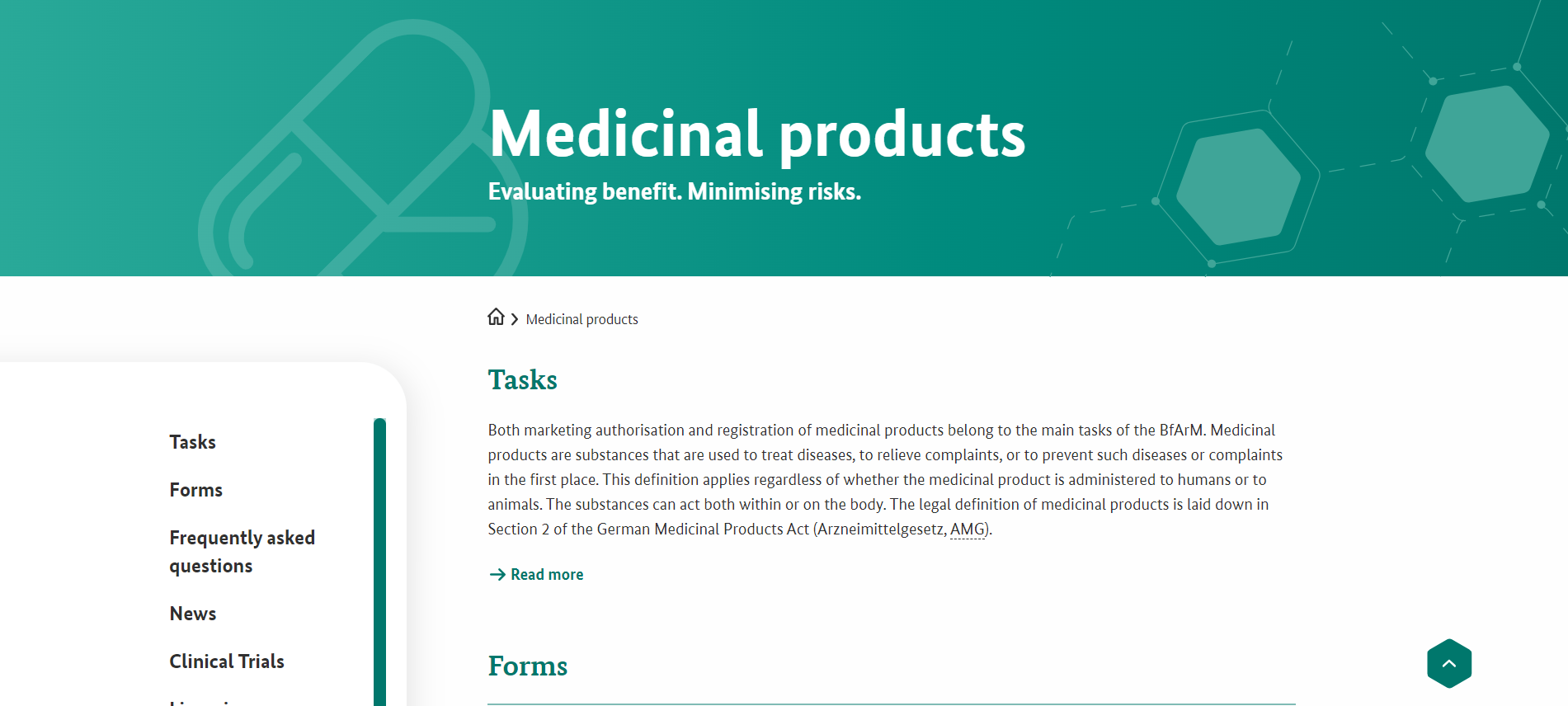
In Germany, the main authority responsible for pharmacovigilance is the Federal Institute for Drugs and Medical Devices (BfArM), located in Bonn, along with the Paul-Ehrlich-Institut (PEI).

BfArM is primarily responsible for pharmaceuticals and medical devices, while PEI focuses on vaccines and other biological products.


Useful insights about the authority website
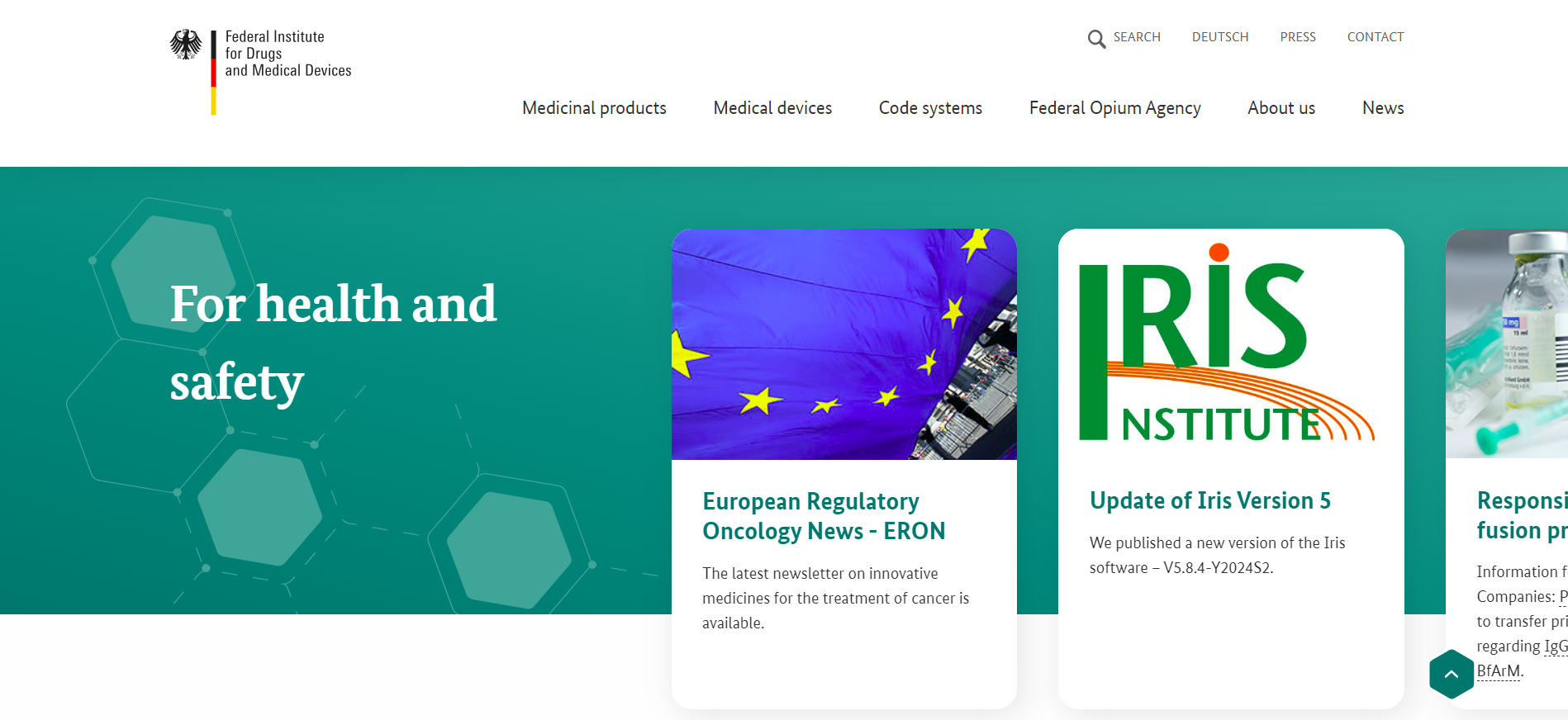
CONTENT IN ENGLISH

Both BfArM and PEI website are fully translated into English, including every important page on pharmacovigilance.

Even though if you find some deeper pages that are only in German or you cannot find what you’re looking for, we suggest you to use the website originally in German and use translator, this way you have potentially much bigger chance to find what you’re looking for.

Interesting website sections related to pharmacovigilance
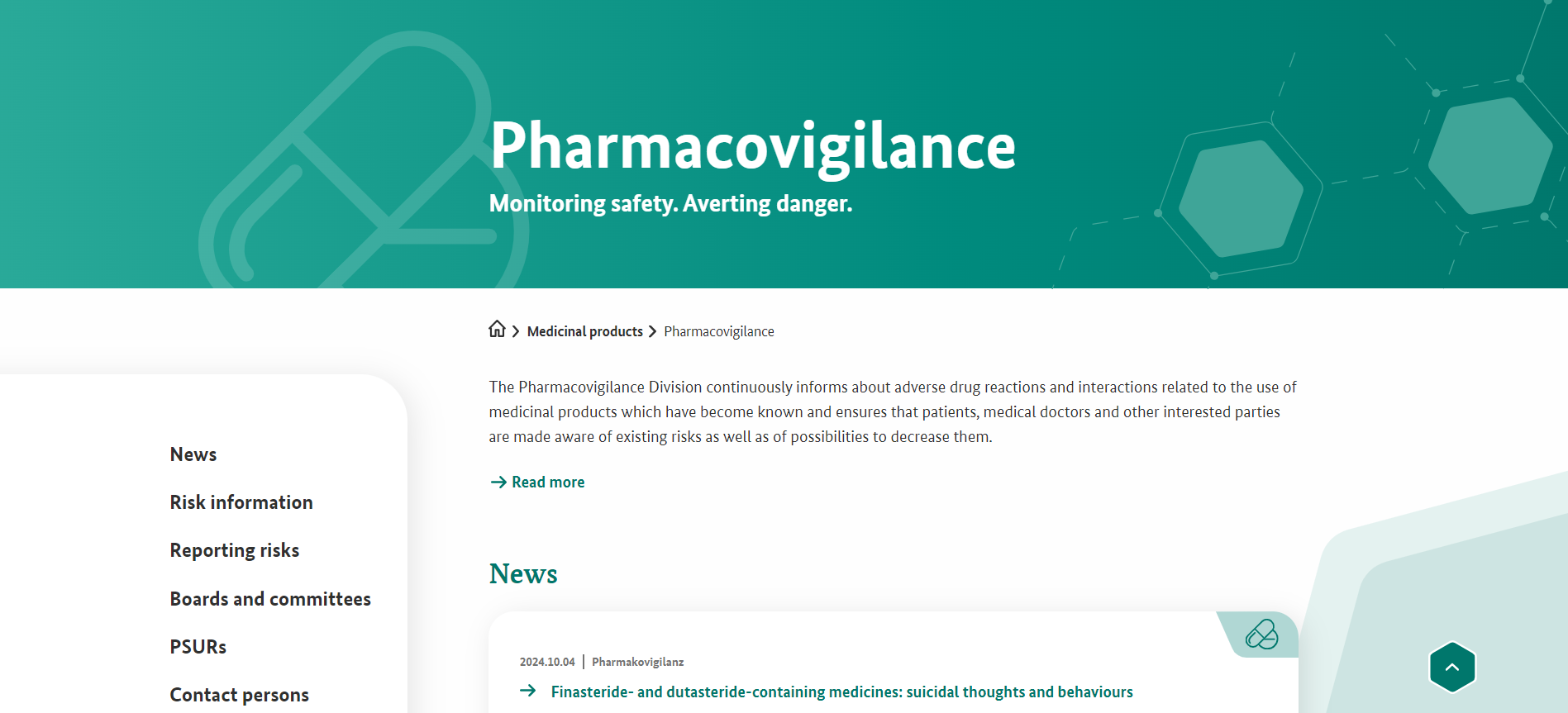
PHARMACOVIGILANCE SECTION

In this section you will find news on pharmacovigilance, general infromation on reporting risks or PSURs. Special attention should be paid to the subsection “Contact persons for Pharmacovigilance”, where you’ll find the most important contact information, you can also visit their FAQ.

Visit the section >

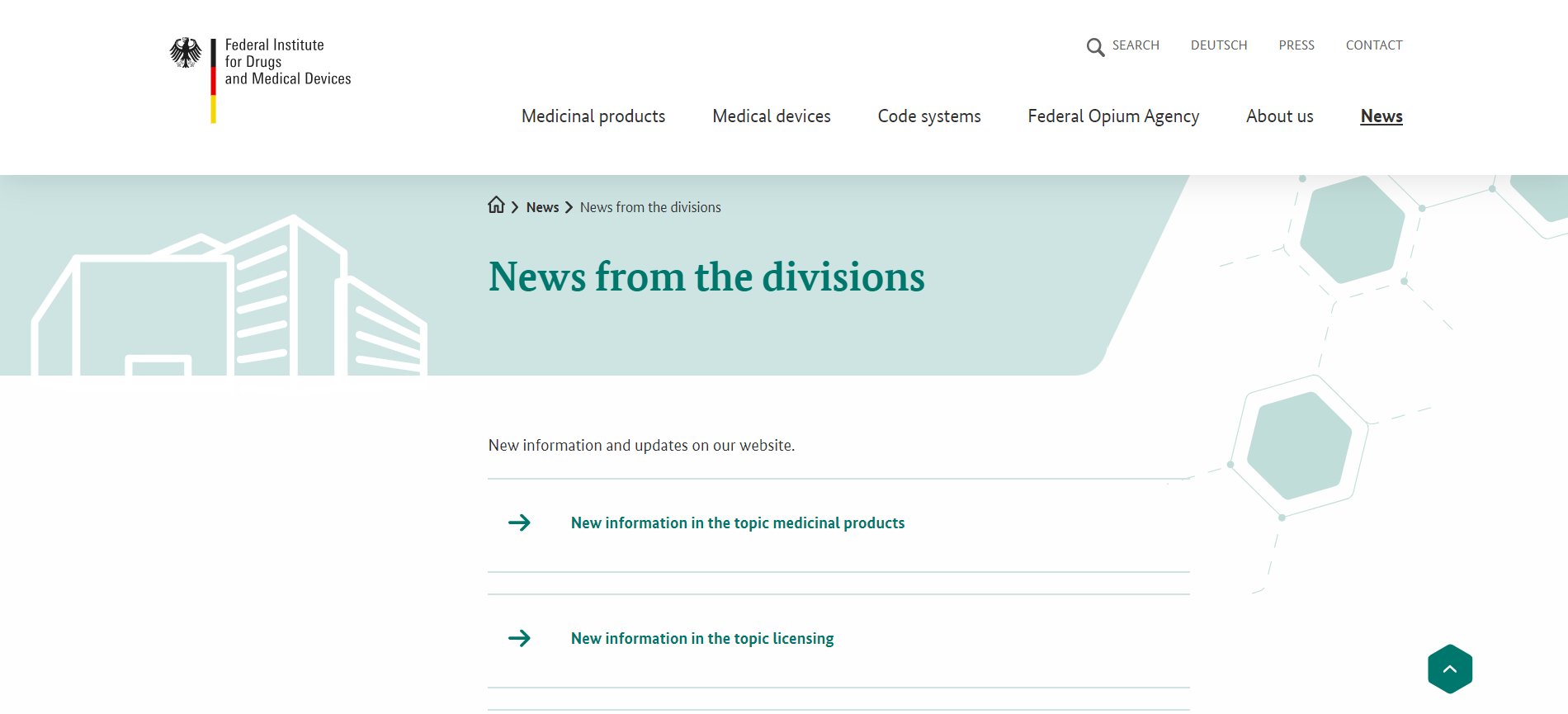
NEWS FROM THE DIVISIONS

News on pharmacovigilance can be also found here but, as the heading says, even from other divisions such as clinical trials or medicinal products.

Visit the section >

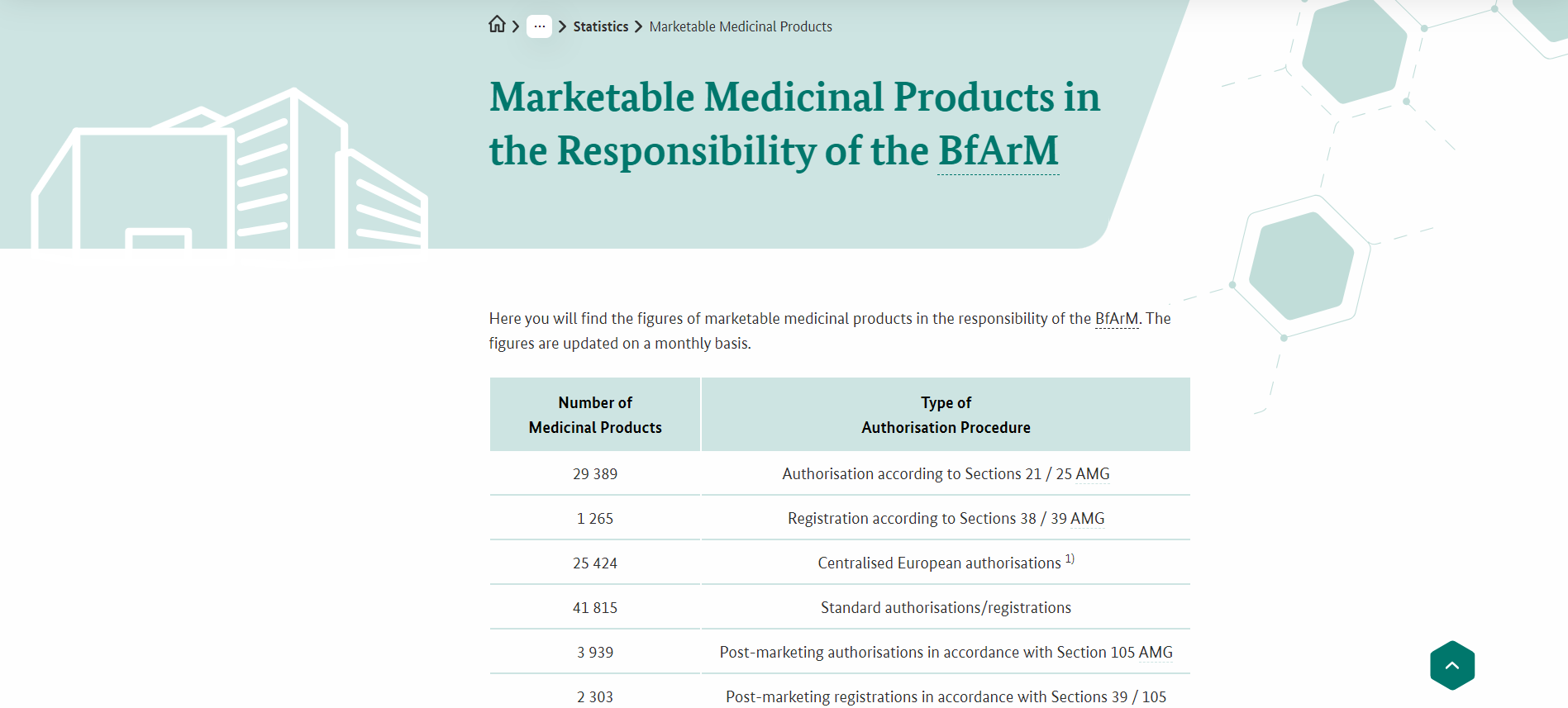
MARKETABLE MEDICINAL PRODUCTS

This page offers you to easily find the figures of marketable medicinal products in the responsibility of the BfArM. The figures are updated on a monthly basis.

Visit the section >

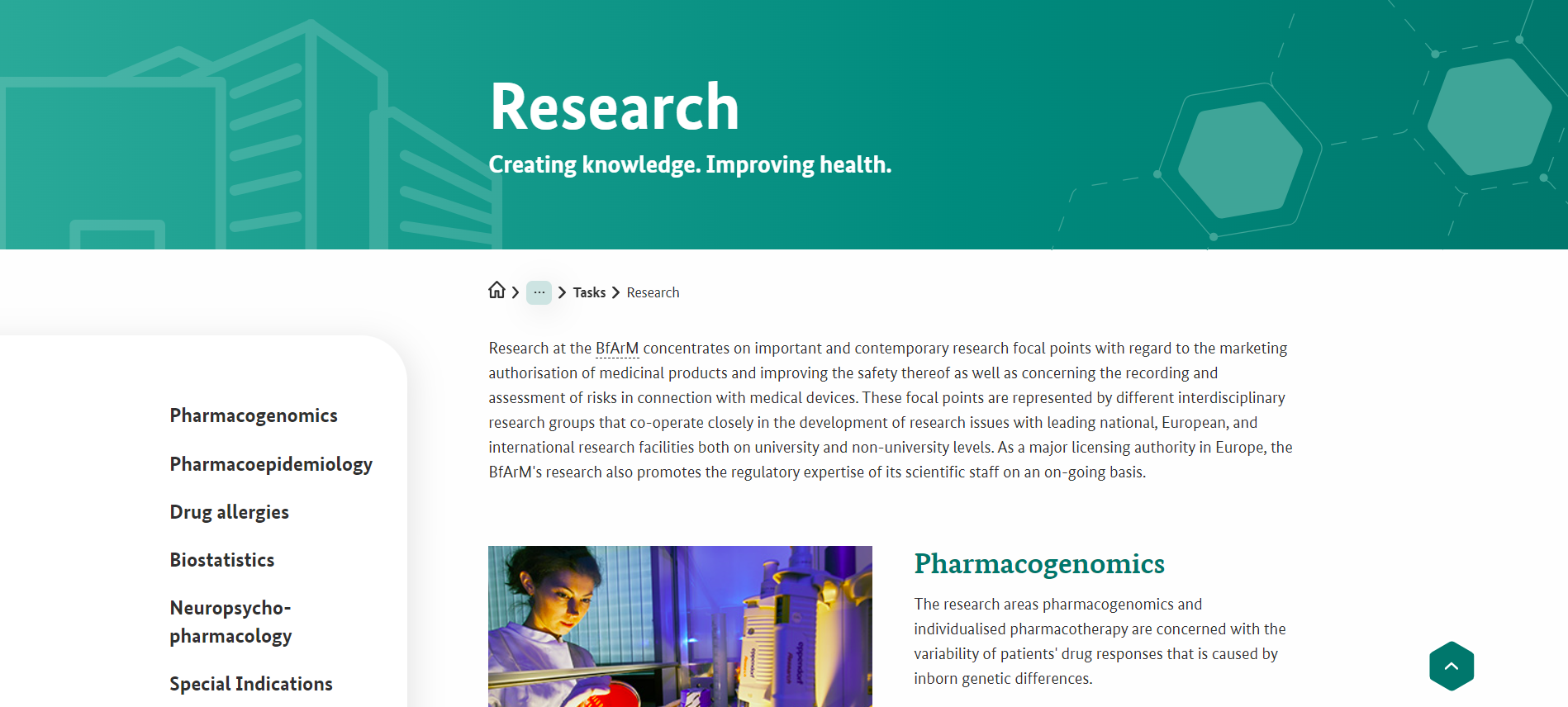
RESEARCH

Dive into the world of science, here at BfArM research section you can stay in the picture with newest breakthroughs in science regarding health, namely Pharmacogenomics, Neuropsyco-pharmacology and more.

Visit the section >

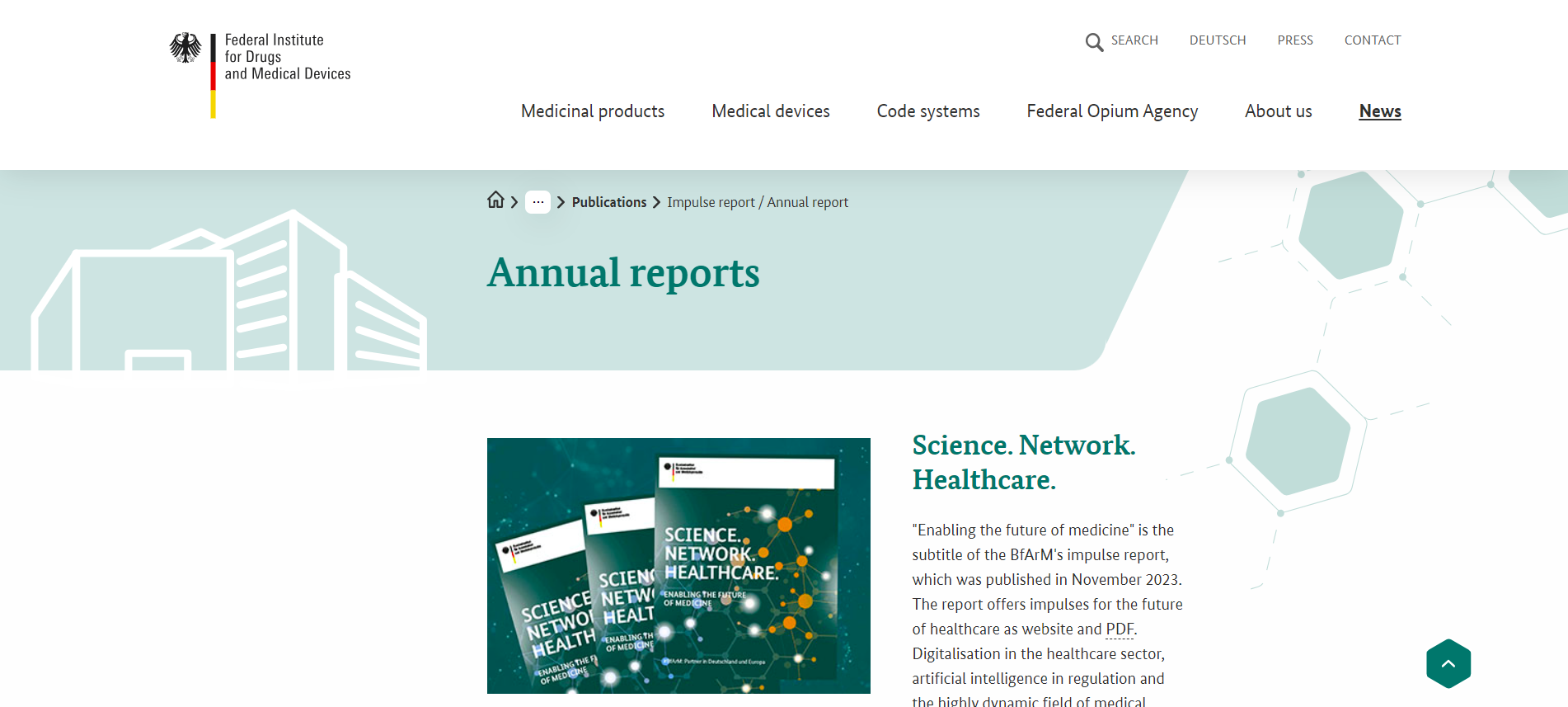
ANNUAL REPORTS

The annual report of BfArM provides a detailed overview of its activities, including statistics on drug approvals, clinical trials, and adverse drug reactions reported. 

Visit the section >

MEDICAL PRODUCTS

Here you can find forms and frequently asked questions on pharmacovigilance. There is also link for statistics (we linked on of them above – marketable medicinal products) and link for reporting risks.

Visit the section >

BULLETIN

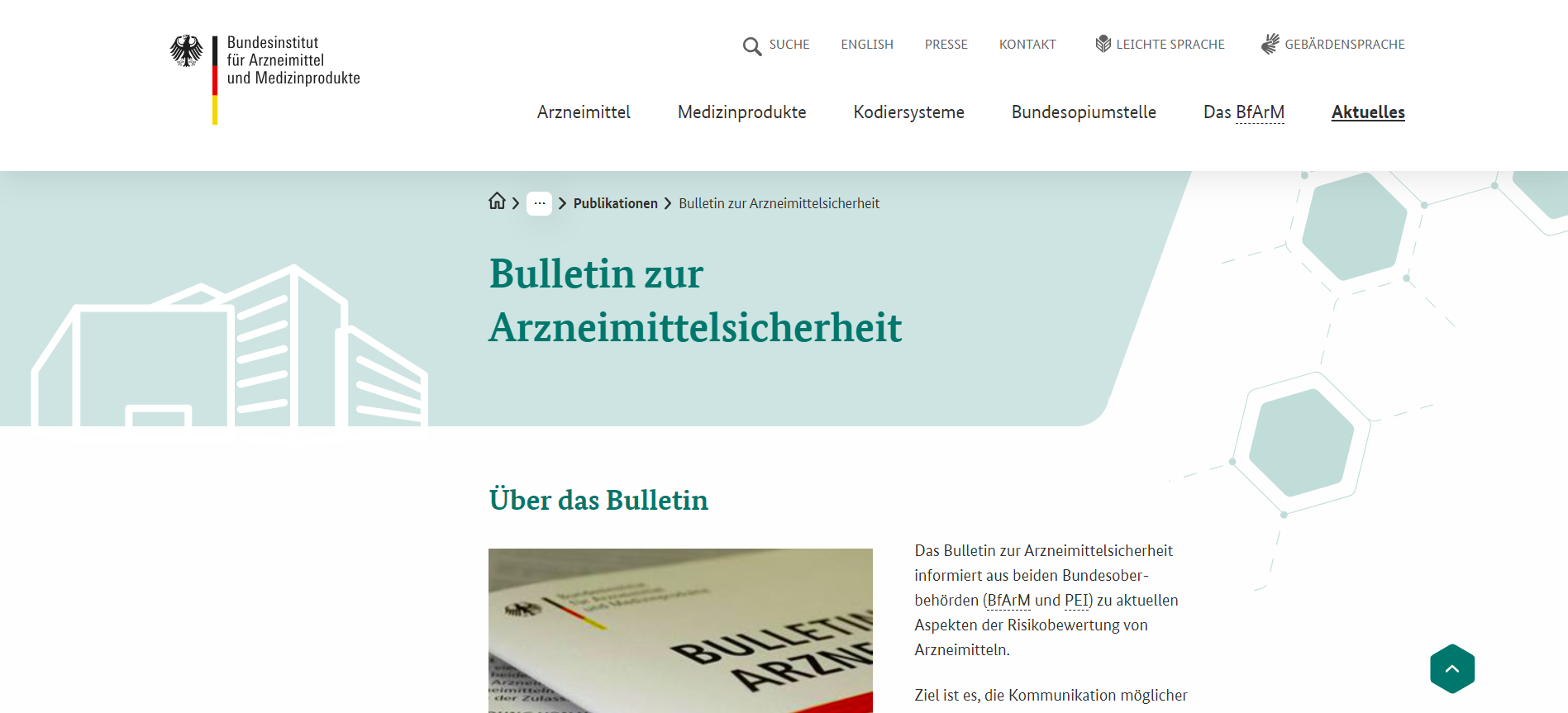
Subscribe to the Bulletin on Drug Safety providing valuable insights from both federal authorities, BfArM and PEI, on the current aspects of risk assessment for medicinal products in Germany.

Visit the section >

Other important institutions & industry groups
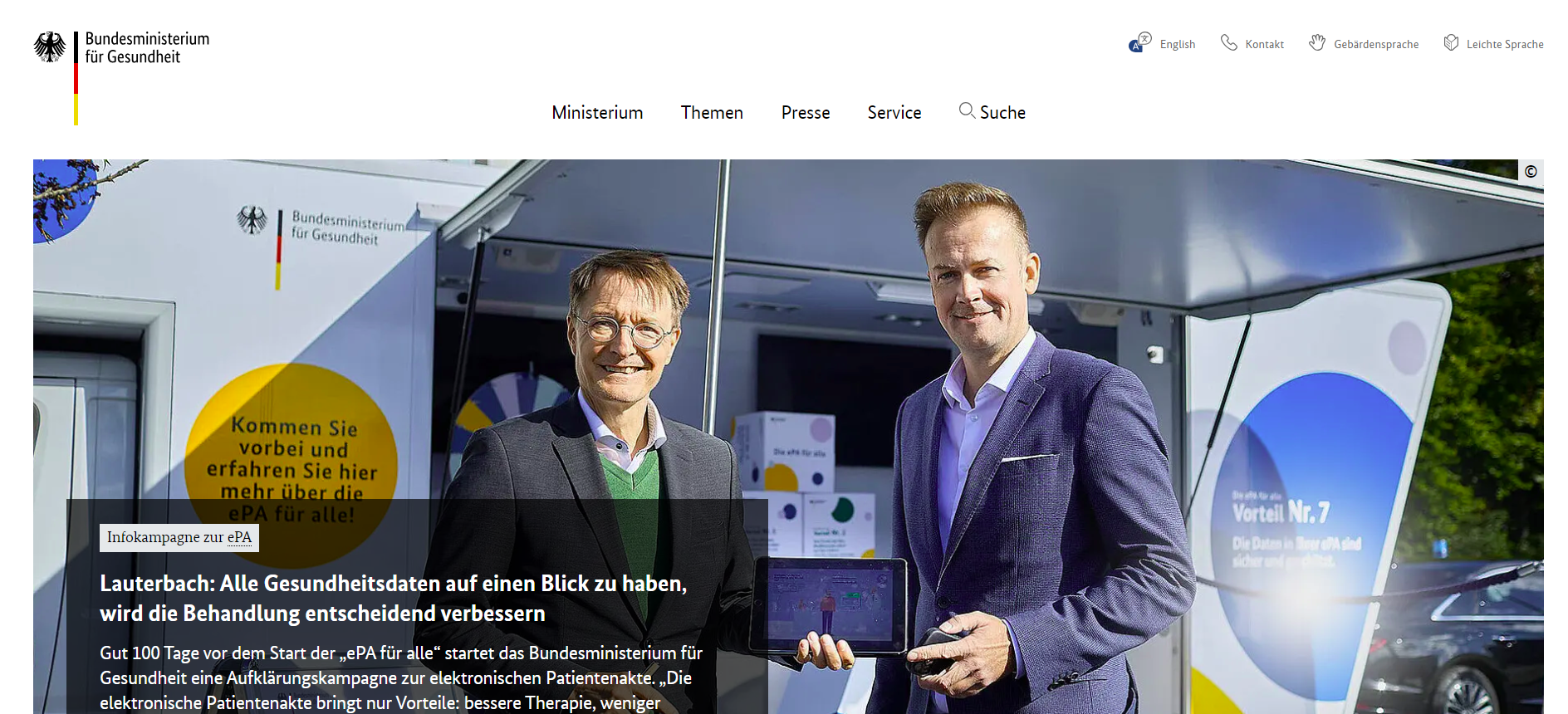
FEDERAL MINISTRY OF HEALTH (Bundesministerium für Gesundheit, BMG)

A key cabinet-level ministry in Germany responsible for health policy and regulation at the federal level. The ministry oversees various health-related institutions, including:

We recommend to visit their publication or laws section where full texts of basically every law or regulation regarding health can be found, both sections are accessible only in German.

BMG website: https://www.bundesgesundheitsministerium.de/

INSTITUTE FOR QUALITY AND EFFICIENCY IN HEALTH CARE (IQWIG)

This institute assesses the benefits and risks of medical treatments and diagnostic procedures, providing valuable data for decision-making in health care.

If you have any questions about IQWIG, we’d reccomend to visit their FAQ section, if you’re more interested in publications, their section dedicated to this topic offers list of their publications throughout last 5 years, both sections are in German.

IQWIG website: https://www.iqwig.de/en/

VERBAND FORSCHENDER ARZNEIMITTELHERSTELLER (VFA)

Prominent trade organization in Germany representing the interests of research-based pharmaceutical companies. VFA comprises 48 member companies that collectively account for more than two-thirds of the German pharmaceutical market and employ over 90,000 people in the country.

On their website you can find many articles, though most of them is only in German, from those that are in English we can recommend “Germany needs to reverse trend in pharmaceutical innovation” or guide “How to report side effects”. From other interesting parts of their website we can mention their podcast or “Insights & Images” with infographics.

VFA website: https://www.vfa.de/

    PHARMA DEUTSCHLAND e.V.

    This is the largest association representing the pharmaceutical industry in Germany, uniting around 400 member companies that employ approximately 80,000 people. It also advocates for the interests of both multinational corporations and medium-sized enterprises.

    Here we reccomend to visit page dedicated to EU pharmaceutical reform, or page dedicated to pricing, where you can find nice infographic explaining how prescription drugs are priced. You can also view the latest edition of the figures brochure “The Pharmaceutical Market – Pharma Data Germany”. All linked pages are in German.

    Pharma website: https://www.pharmadeutschland.de/

    Some of the most important laws

    Basic legislation

    Arzneimittelgesetz (AMG)

    Ensures the safety, quality, and efficacy of medicinal products before they can be marketed in Germany.

    Medizinprodukte-Anwendermelde und Informationsverordnung (MPAMIV)

    Ordinance on the Reporting of Suspected Serious Incidents.

    Arzneimittel- und Wirkstoffherstellungsverordnung (AMWHV)

    The Ordinance for the Manufacture of Medicinal Products and Active Pharmaceutical Ingredients.


    Guidelines

    Good Pharmacovigilance Practice (GVP) Modules

    The GVP modules, developed by the European Medicines Agency (EMA), provide guidelines on the implementation of pharmacovigilance activities.

    Essential EU Legislation and EMA Guidlines

    Since Germany is a member of the EU, every MAH with a product on the German  market needs to follow the European pharmacovigilance legislation and guidelines by EMA (European Medicine Organization).

    To navigate through the European regulations, its is useful to know following:

    EMA Pharmacovigilance System Manual
    Directive 2001/83/EC and Regulation (EC) 726/2004
    Commission Implementing Regulation (EU) 520/2012
     

    Local pharmacovigilance specifics

    Useful abbreviations to know

    If you want to study local materials about pharmacovigilance in Germany, following terms will be helpful for you to get familiar with:

    EMA (European Medicine Organization)
    → Key part of the EU, dedicated to ensuring the safety and effectiveness of medicines.

    BfArM (Bundesinstitut für Arzneimittel und Medizinpordukte)
    → Federal Institute for Drugs and Medical Devices

    PEI (Paul-Ehrlich Institute)
    → Main authority on vaccines and other biological products.

    GPO (Graduated plan officer / Stufenplanbeauftragter)
    → German version of QPPV.

    AMG (Arzneimittelgesetz)
    → German Medicines Act

    Is LCPPV needed or is EU QPPV enough?

    Yes, a LCPPV is required in Germany. In the German context, this role is referred to as the “Stufenplanbeauftragter” or Graduated Plan Officer (GPO).

    According to §63a of the German Medicines Act (AMG), any pharmaceutical entrepreneur placing finished medicinal products on the market must appoint a qualified person who resides in a Member State of the European Union.

    If you need a translation of those instructions or more information about LCPPV requirements in Europe in general, just check our free comprehensive guide available here.

    Let us appoint LCPPV for you >

    How can be adverse events reported in Germany?

    To report ADR(s) fill out the form with as much detailed medical information as possible about the suspected ADR.  There are separate forms for healthcare professionals and patients/consumers.

    Submit the completed form to BfArM, either online or by mail. Healthcare professionals can also report through the Drug Commission of the German Medical Association.

    Local medical journals to screen

    Here are few examples of German local literature that medical authorization holders should monitor:

    DEUTSCHES ÄRZTEBLATT 

    A prominent German medical journal, founded in 1872, that serves as the official publication for the German Medical Association.

    There is a variety of content, including peer-reviewed articles, health policy updates etc.

    The journal publishes in both German and English.

    ISSN: 1866-0452

    Check journal website >

    DEUTSCHE MEDIZINISCHE WOCHENSCHRIFT (DMW)

    Well-established German medical journal that publishes peer-reviewed articles on a wide range of medical topics, including clinical research, health policy.

    The journal is known for its commitment to high scientific standards, making it a valuable resource for physicians and medical researchers in Germany and beyond.

    ISSN: 1439-4413

    Check journal website >

    DIE INNERE MEDIZIN

    Journal focusing on all aspects of internal medicine, aimed at internists and general practitioners interested in this field.

    The journal, published monthly, also focuses on clinical research and the application of new findings in practice and it covers a broad spectrum of internal medicine but with a particular focus on certain subfields

    ISSN: 2731-7080

    Check journal website >

    GERMAN MEDICAL SCIENCE (GMS)

    An interdisciplinary e-journal that publishes original research and review articles across the entire field of medicine, focusing on scientific publications.

    Readers can expect peer-reviewed content that is freely accessible online, ensuring immediate and permanent availability of articles to all interested parties. 

    ISSN: 1612-3174

    Check journal website >


    Rather then spending your budget for hours of repetitive manual work to monitor those sources, we recommend to simply automate this task using our Tepsivo Literature solution.

    Learn how to screen automatically >

    Other interesting resources

    GERMANY: Country Health Profile

    Health Profile 2023

    The 2023 editions provide a comprehensive look at the health landscape in the country, exploring key topics such as overall health status, important health determinants and risk factors, and how the health system is organized and funded.

    briefly on gpo

    In Germany, all companies that market medicinal products must appoint a Graduated Plan Officer (GPO), who has additional responsibilities beyond the EU Qualified Person for Pharmacovigilance (QPPV), such as recording complaints and notifying authorities. While the same person can fulfill both roles, the appointment must be officially registered through the PharmNet.Bund portal, emphasizing the GPO’s unique duties tailored to the German market.

    More information about GPO on BfArM

    interesting links

    The drug information portal – PharmNet.bund

    It gives you access to official data collected across Germany about the marketing authorization and oversight of medicinal products, making it easier to find the information you need.

    The German Medical Devices Information and Database System (DMIDS)

    Contains various types of information related to medical devices in Germany, including: Notifications of Incidents and Serious Adverse Events (SAEs), Classification of Medical Devices and Legal Status Determinations etc.

    Bundesministerium für Gesundheit: The German healthcare system

    General description of German health system by ministry of health.


    Scientific publications regarding pharmacovigilance

    Pharmacovigilance in Germany

    This article will showcase various pharmacovigilance tools and explain why progress in this area has stalled in Germany. You’ll gain insights into the challenges faced and the potential for improvement, making it a must-read for anyone interested in drug safety and public health.

    Paul Ehrlich (1854-1915) and His Contributions to the Foundation and Birth of Translational Medicine

    In a recent study involving 830 pediatric neurologists, it was found that while many are familiar with pharmacovigilance (PV) and adverse drug reactions (ADRs), a surprisingly low percentage believe that most ADRs are preventable—only 34.1% in Poland and 38.9% in Germany. Despite recognizing the importance of reporting ADRs in children with epilepsy, many neurologists felt that doing so would add unnecessary workload.

    Do you need some help with putting the German PV System together? We’re here for you.

    And while you’re here…

    …consider also our global end-to-end PV solution!

    Thanks to the Tepsivo platform, you can get a full pharmacovigilance system in all countries you need – for a fraction of the usual budget.

    Tepsivo Oy | Urho Kekkosen katu, 4-6 E, 00 100, Helsinki, Finland | VAT number FI31367614 | contact@tepsivo.com  | +358 402 204 698 | Privacy policy