1

Pharmacovigilance in Australia

How is it with the drug safety system in the “Land Down Under”? Read our guide to get a clear picture.

And of course, if you feel you need a local consultant, we’re here for you.

Current status of our Australian pharmacovigilance services:

QPPVA / A-PVCP in Australia

AVAILABLE

Easily managed through Tepsivo Platform >

Local Literature Screening

AVAILABLE

Automated monitoring with Tepsivo Literature >

Who is the main PV authority in Australia?
RESPONSIBILITY FOR NATIONAL PV SYSTEM

The main authority on pharmacovigilance in Australia is The Therapeutic Goods Administration (TGA), which is responsible for detecting, assessing, understanding and preventing adverse effects and other medicine-related problems.

The TGA has no regional centers and it is headquartered in Canberra, the capital city of Australia. TGA operates as a key agency within the Australian Government’s Department of Health and Aged Care

Interesting website sections related to pharmacovigilance
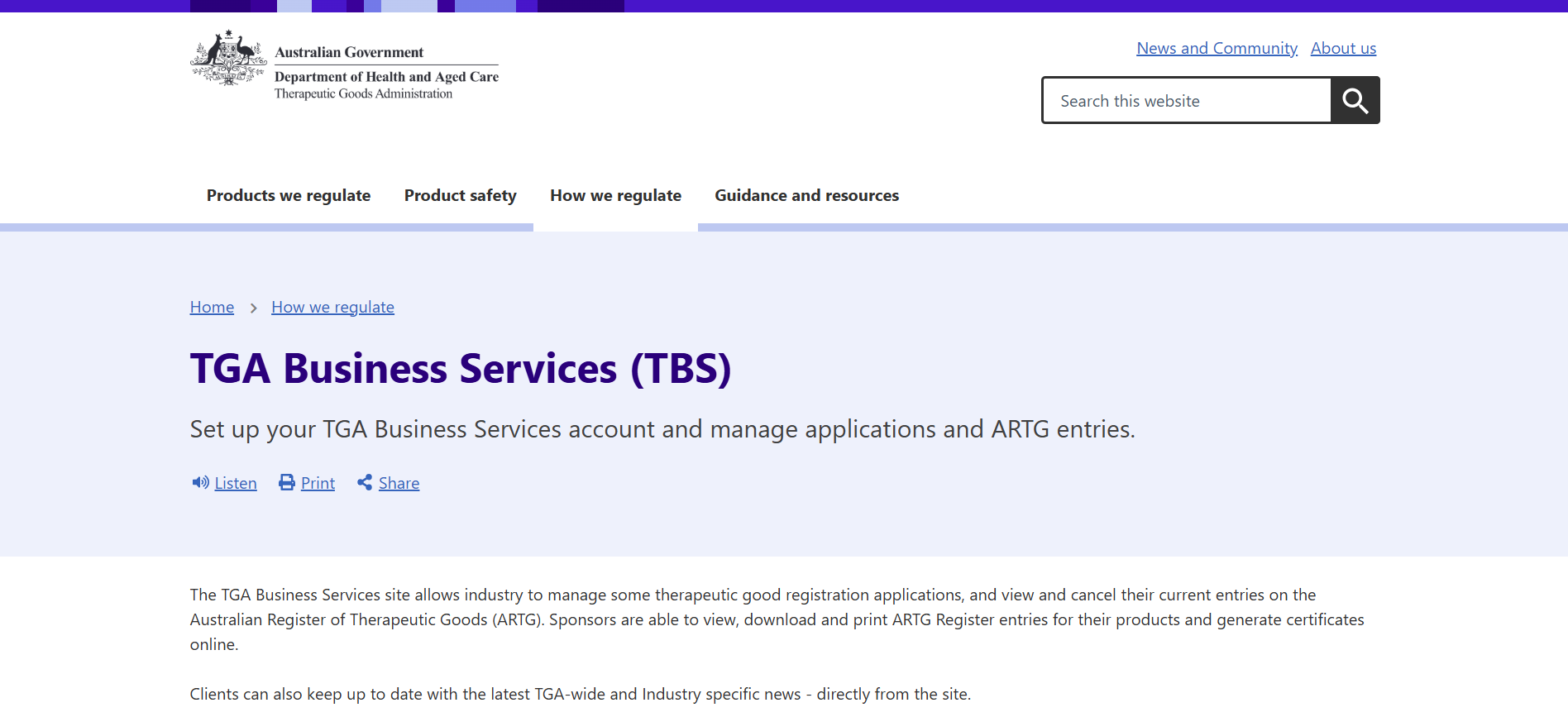
TGA BUSINESS SERVICE ACCOUNT

Its primary purpose is to allow users, such as sponsors and manufacturers, to manage therapeutic goods registration applications, view and cancel entries on the Australian Register of Therapeutic Goods (ARTG), and generate product certificates. This account is meant for organizations involved in the development and marketing of therapeutic products.

Visit the section >

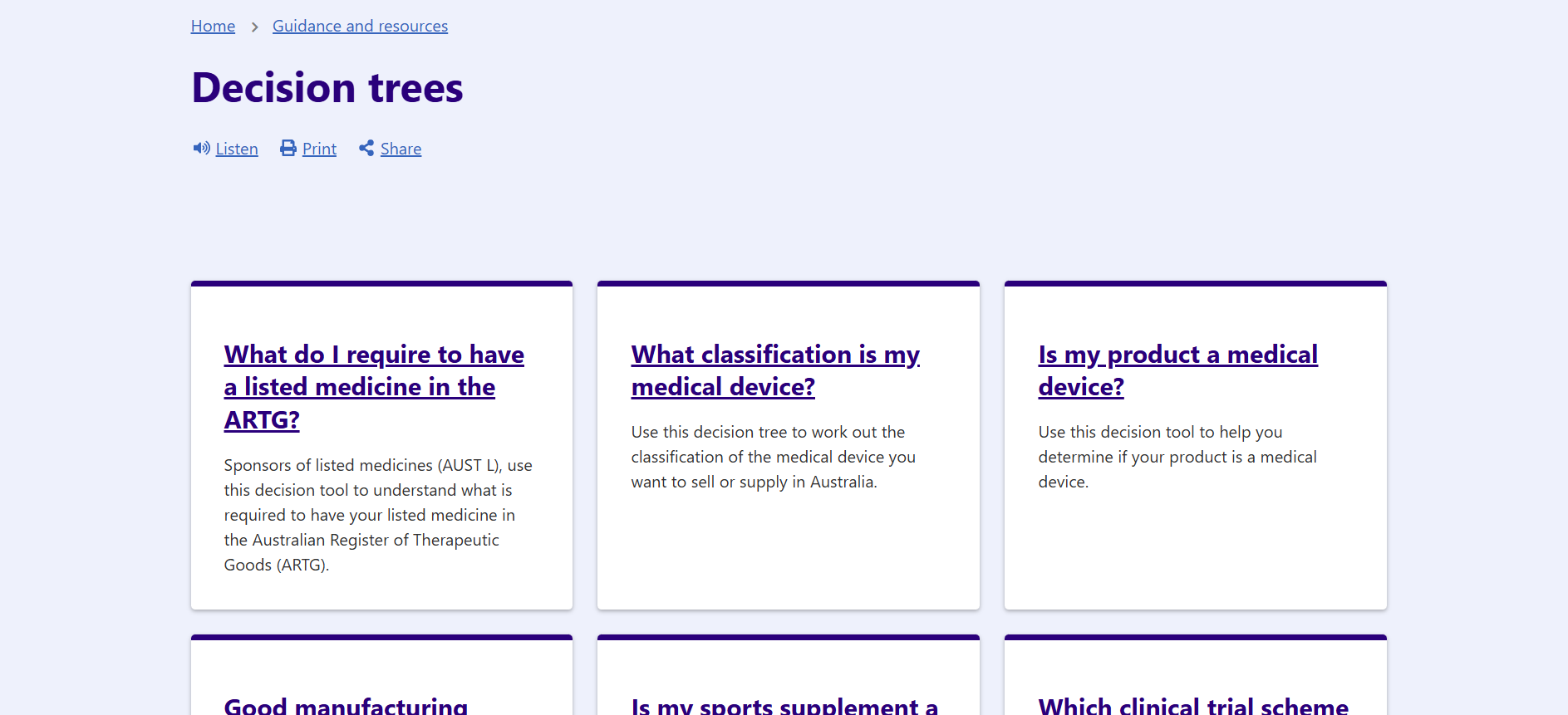
DECISION TREES

Check out this page, if you’re having a dilemma, like whether is your product a therapeutic good or not. This section partially works ass Q&A and also is a bit educational.

Visit the section >


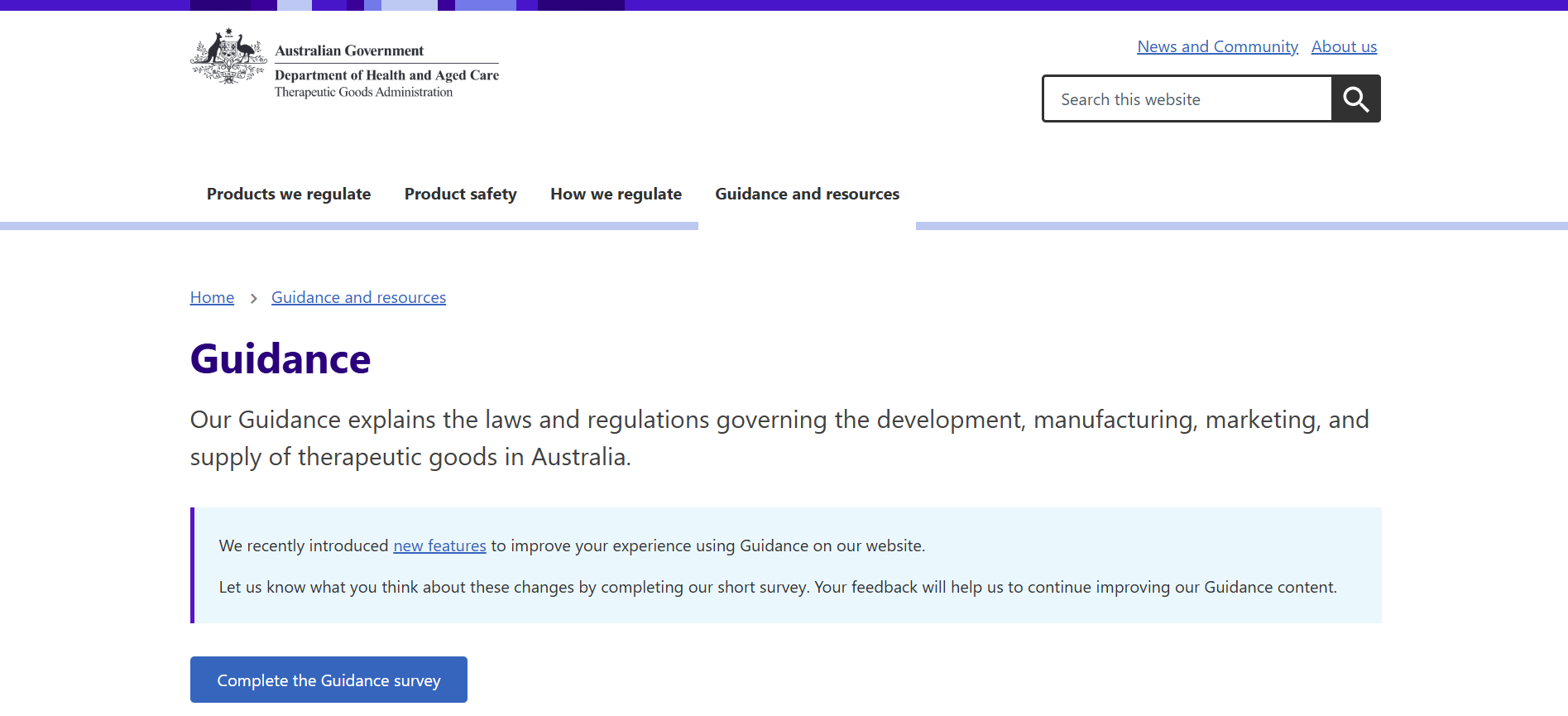
GUIDANCE

Materials that outlines the laws and regulations that govern the development, manufacturing, marketing, and supply of therapeutic goods in Australia. You can filter the library on the left side.

Visit the section >

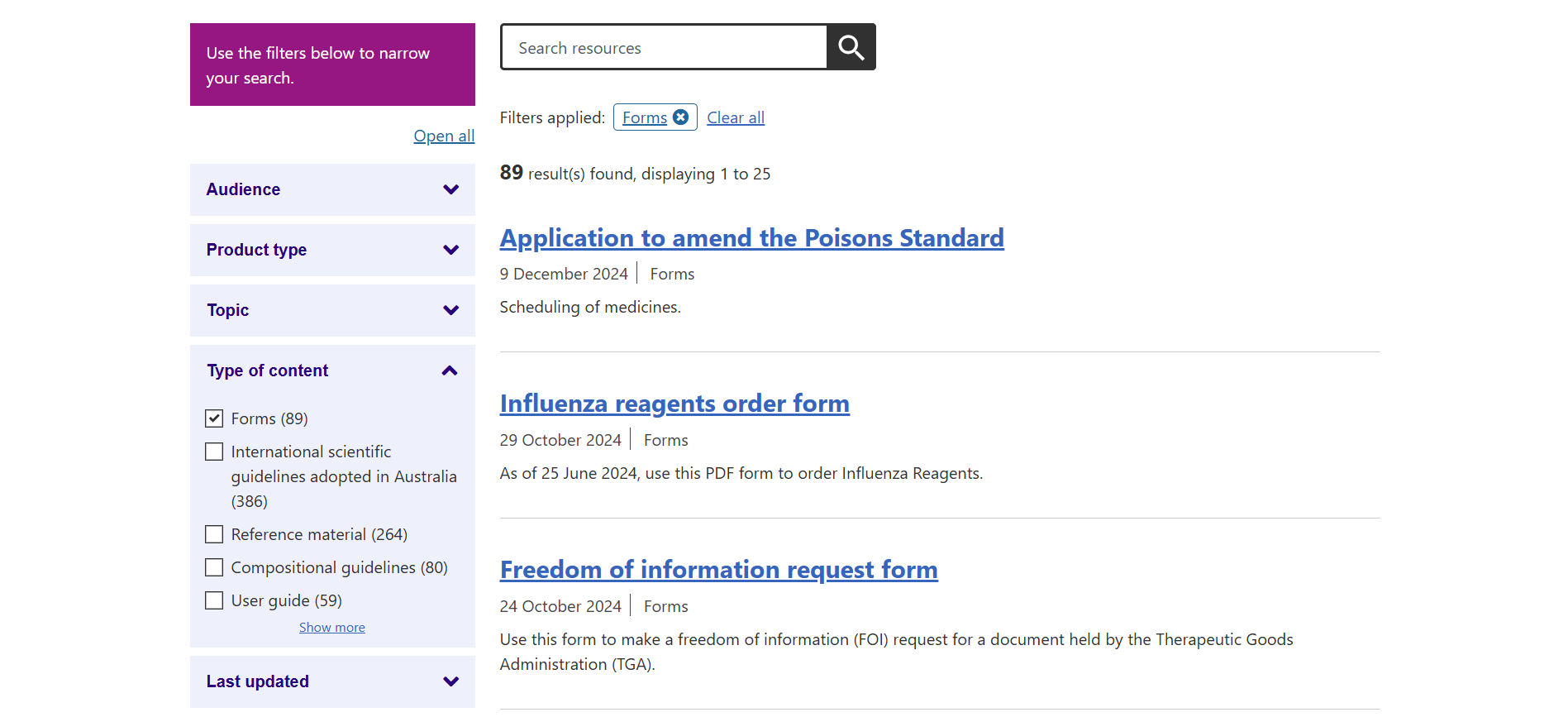
FORMS TO DOWNLOAD

All important forms at glance, you can find them here in this library, however, make sure you have ticked the forms in the column on the left, otherwise you will have to search for them among everything else.

Visit the section >

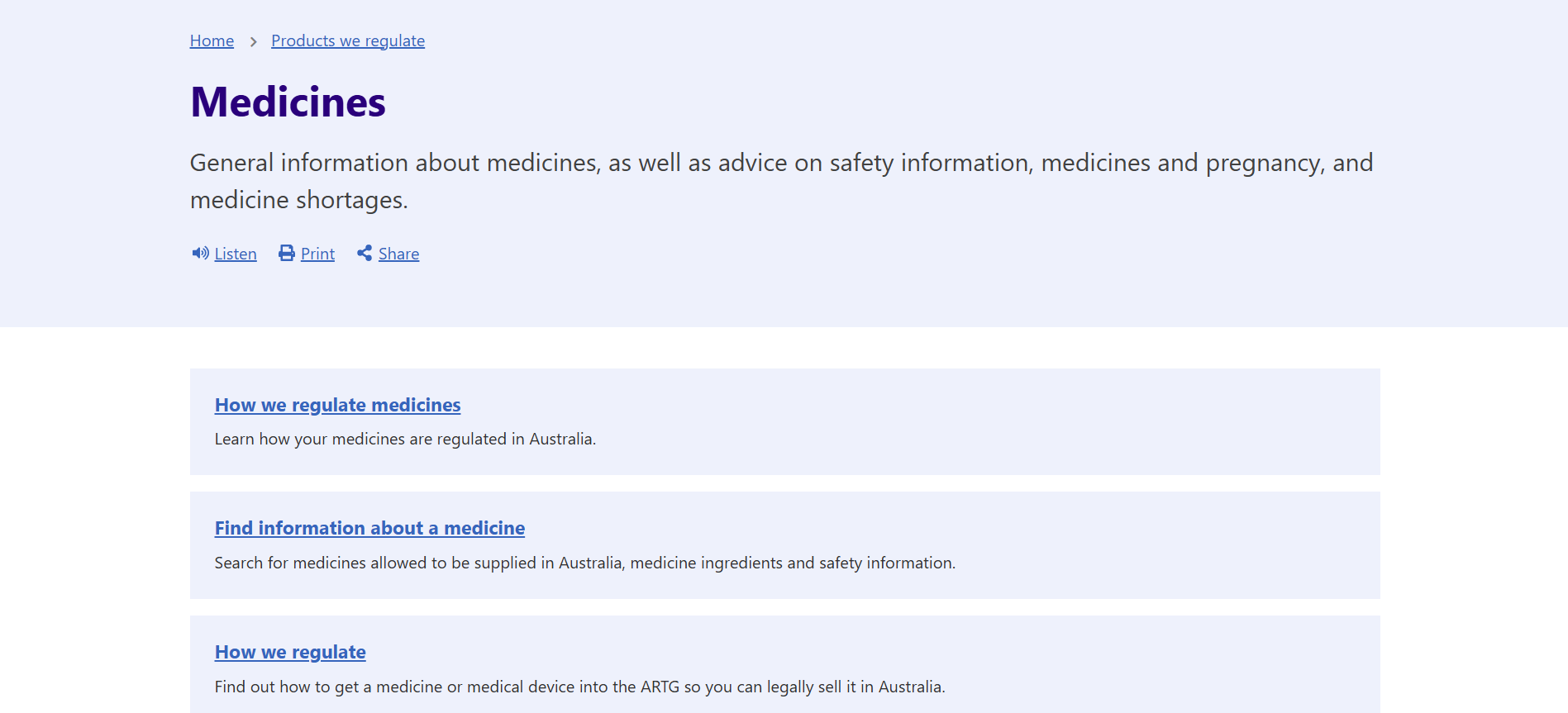
MEDICINES

General information about medicines, with two importantn subsections: how medicines are regulted and where to find intel on medicines.

Visit the section >

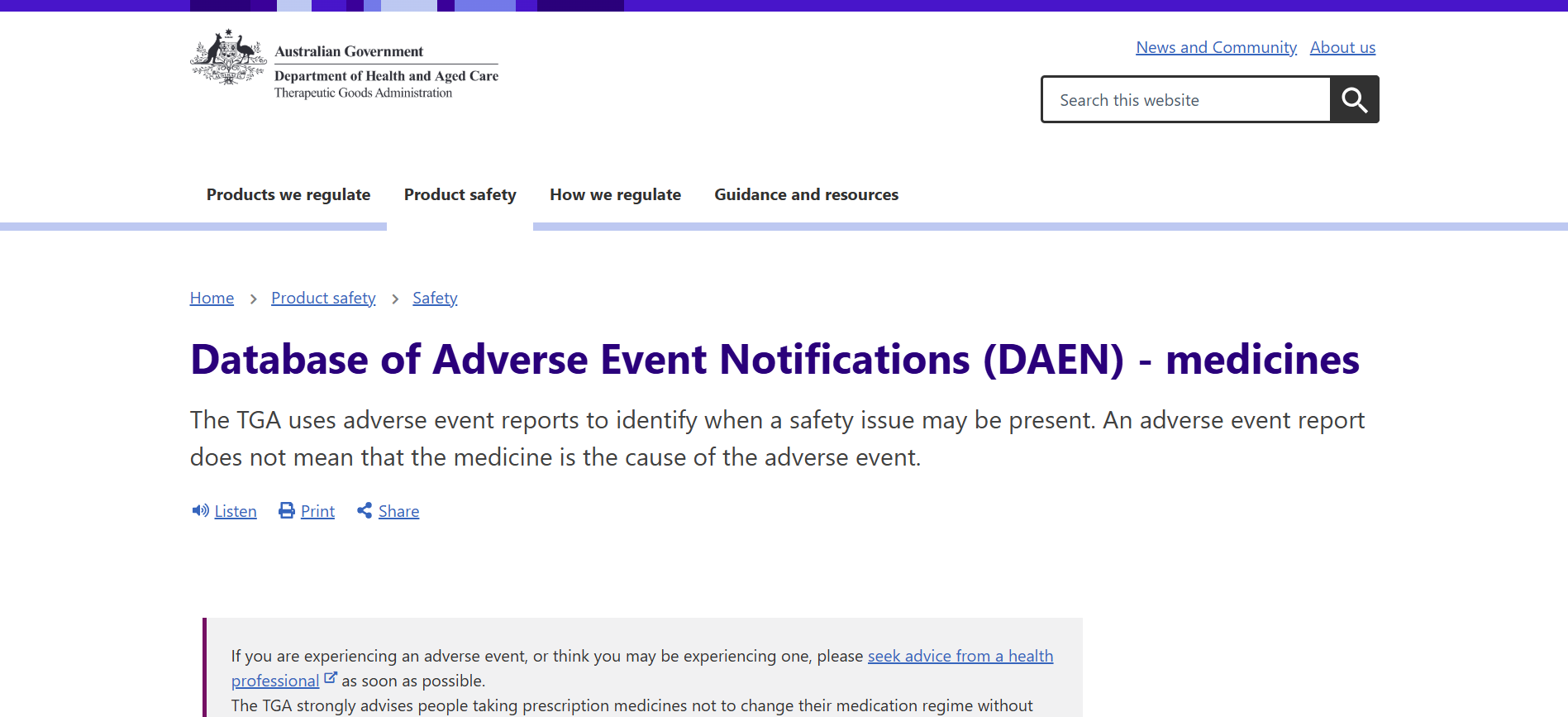
DATABASE OF ADVERSE EVENT NOTIFICATIONS 

Find details on adverse events associated with medicines, vaccines, and biological therapies used in Australia. On the linked page there is also a quick guide about regarding the database. Also when you actually get into the database, give it while, the may loading take some time.

Visit the section >

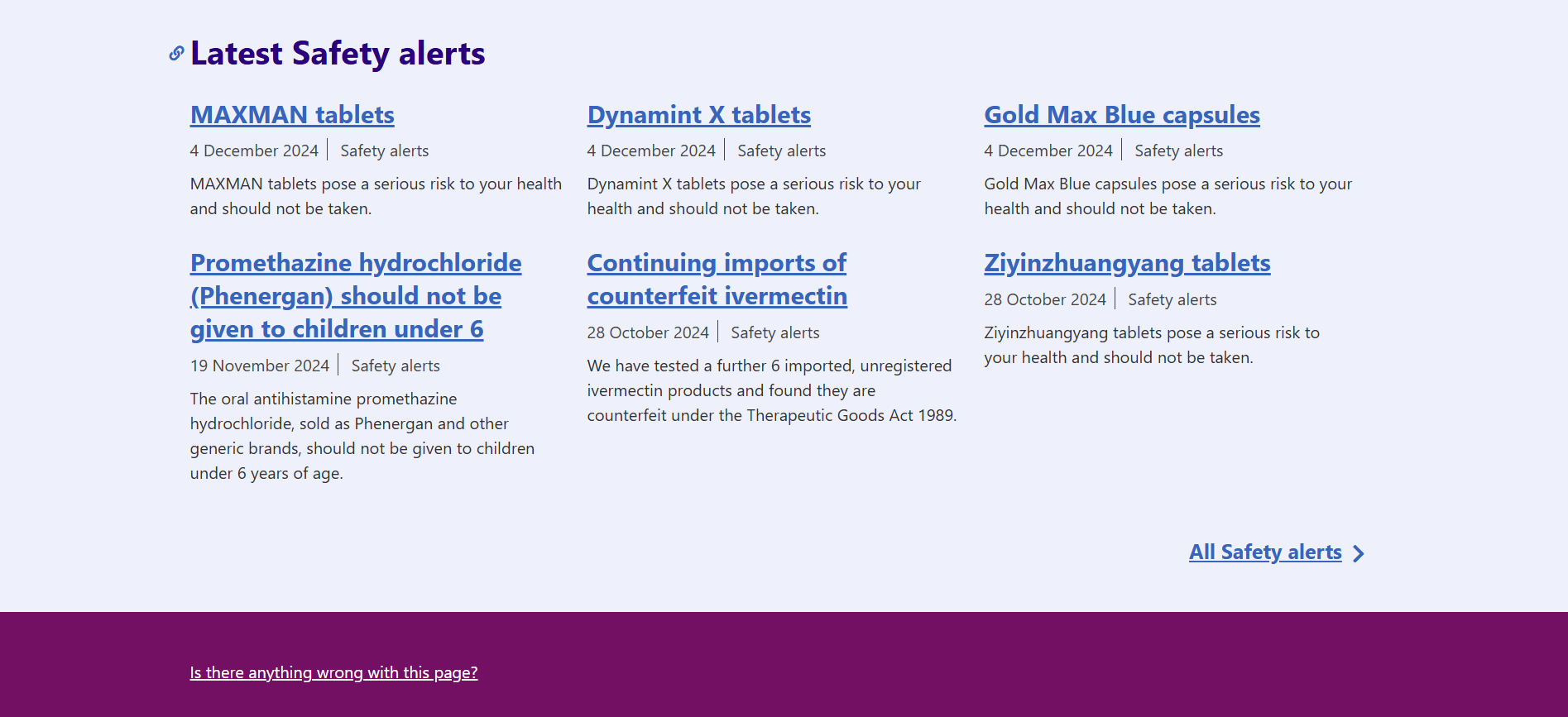
SAFETY ALERTS

A safety alert informs you of a potential risk or action you should take regarding a health product and here on this page, you’ll find them all at one place, just scroll a bit down on the linked page.

Visit the section >


Other important institutions & industry groups
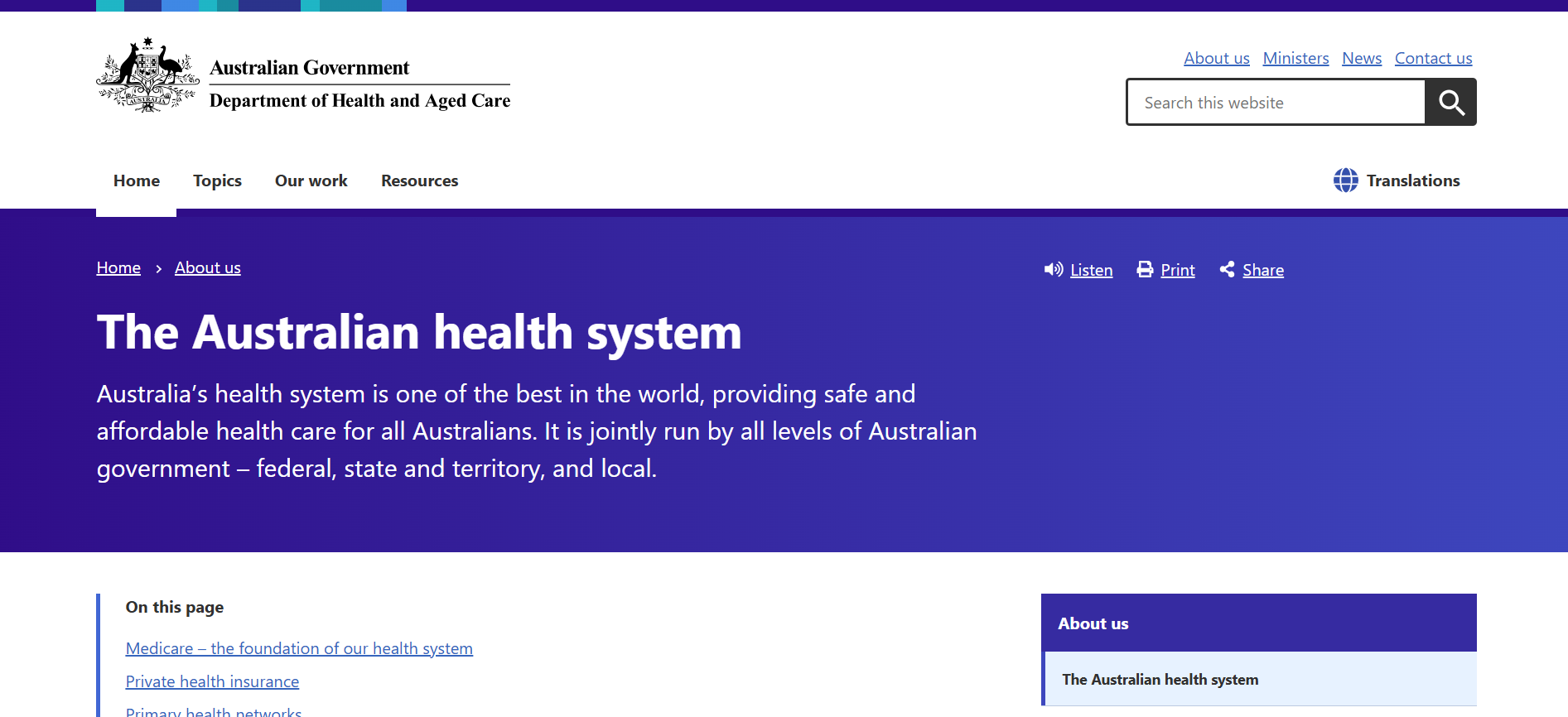
DEPARTMENT OF HEALTH AND AGED CARE

This is the primary federal government department responsible for national health policy, funding, and oversight of health services, aged care, and public health initiatives.

Their website is truly user-friendly, there is no difficulty in finding information of any kind related to health. We recommend to visit their vast Resources section, which does not include only written publications but also videos, webinar, audios and more. When searching, you can filter by topics, diseases, years etc. You can also see their 10-year National Drug Strategy focused on reducing and preventing the negative impacts of alcohol, tobacco, and other drugs or their annual report.

Ministry’s website: https://www.health.gov.au/

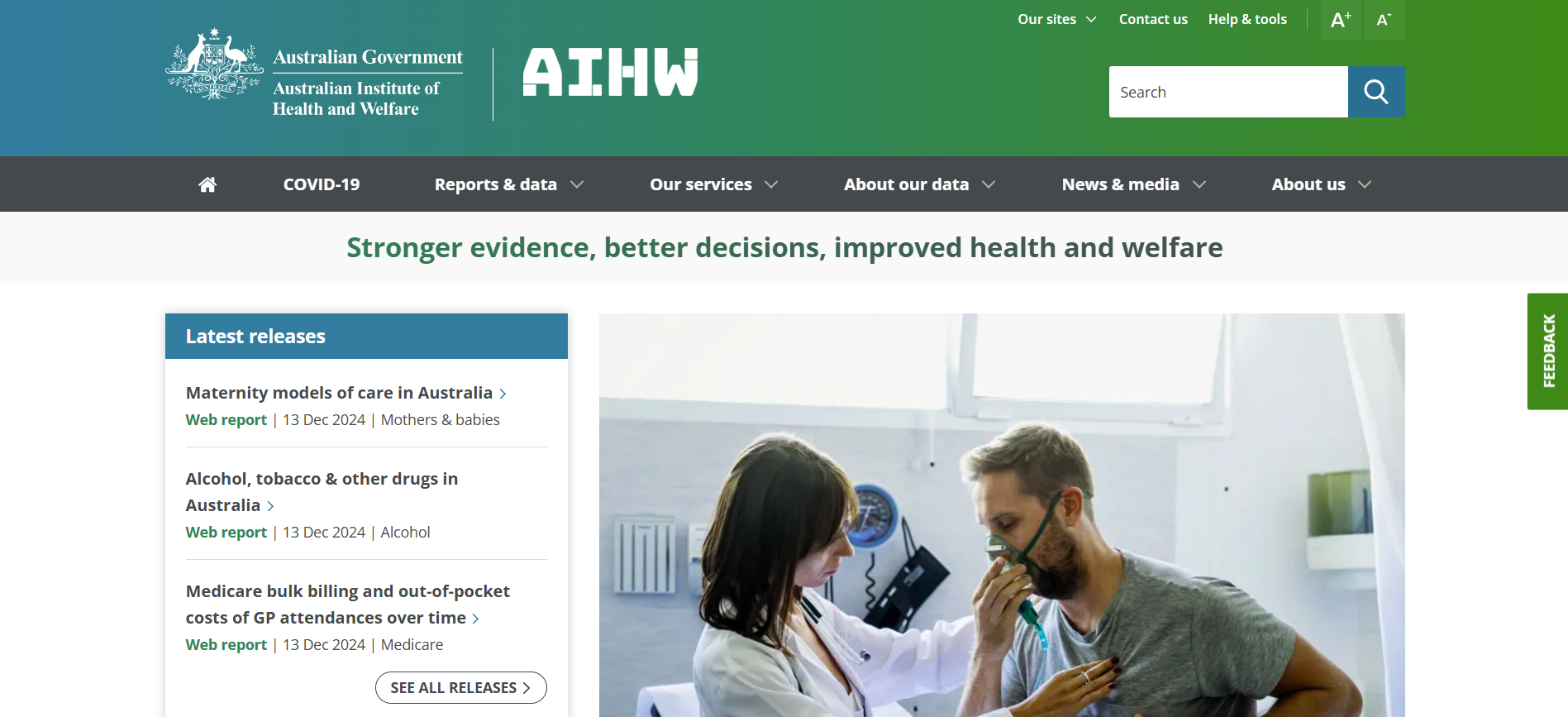
AUSTRALIAN INSTITUTE OF HEALTH AND WELFARE (AIHW)

AIHW provides data and information on health and welfare in Australia, producing reports that inform health policy and service planning.

Make sure to visit their page dedicated to Australia’s health, where you can find a nice overview and also if you’re interesting in any section there, don’t hesitate to dive in. You can also see their quick summary on that topic here. If you want to know more about Australia’s health performance framework simply visit the site, many statistics are awaiting you there, everything from accesibility, efficiency to health behaviours. Also if you’d like to receive notifications from AIHW on a variety of topics, subscribe here.

Institute’s website: https://www.aihw.gov.au/

GENERIC AND BIOSIMILARS MEDICINES ASSOCIATION (GBMA)

The GBMA represents companies that manufacture and sell generic and biosimilar medicines. This association focuses on promoting the interests of the generics sector.

This website does not contain that much as the previous ones, but there is still some interesting content. If you want to get in picture regarding generics or biosimilars, simply head to these sections, there are some facts, key figures and more. The GBMA Code of Practice offers a straightforward guide that helps sponsors of generic medicines listed on the Australian Register of Therapeutic Goods (ARTG) navigate through various laws, regulations, and guidelines they need to follow.

Association’s website: https://gbma.com.au/

MEDICINES AUSTRALIA

Medicines Australia represents research-based pharmaceutical companies in Australia. It focuses on promoting ethical practices within the industry and ensuring that members adhere to the Medicines Australia Code of Conduct.

Here you can read the Medicines Matter Report, which is an annual assessment that compares how quickly new medicines are registered and reimbursed for Australian patients against other OECD countries, though the last one covers years 2016-2021. Then there is also the Voluntary Compensation Guidelines, providing ethical principles to guide how pharmaceutical companies handle compensation for participants in clinical trials. They also have a YouTube channel, where, for example, is this quick video – how medicines get from lab to ordinary people.

Medicines’ website: https://www.medicinesaustralia.com.au/

Some of the most important laws

Basic legislation

Therapeutic Goods Act 1989

This act provides the national framework for regulating therapeutic goods in Australia to ensure their quality, safety and efficacy.

Therapeutic Goods Regulations 1990

This document further detailes the requirements for the regulation of therapeutic goods in Australia, including pharmacovigilance responsibilities.


    Guidelines

    Australian Requirements and Recommendations for Pharmacovigilance Responsibilities of Sponsors of Medicines

    This guideline, published by the Therapeutic Goods Administration (TGA), sets out the mandatory reporting requirements and recommendations for best practice pharmacovigilance by sponsors of registered medicines in Australia.

    Other guidelines

    Some other Guideline on good pharmacovigilance practices (GVP) can be found in the Resources section, such as those on safety communication or risk management systems.

    Local pharmacovigilance specifics

    Useful abbreviations to know

    If you want to study local materials about pharmacovigilance in Australia, following terms will be helpful for you to get familiar with:

    A-PVCP (Australian pharmacovigilance contact person)
    → Responsible for ensuring compliance with Australian regulations and facilitating communication with the TGA.

    QPPVA (Qualified Person for Pharmacovigilance in Australia)
    → Responsible for overseeing the entire pharmacovigilance system for a company’s products.

    TGA (The Therapeutic Goods Administration)
    → main authority on pharmacovigilance

    DAEN (Database of Adverse Event Notifications)
    → contains information from reports of adverse events in relation to medicines, vaccines and biological therapies

    Is Qualified Person Responsible for Pharmacovigilance needed?

    Sponsors (companies holding marketing authorizations for medicines) in Australia must nominate a contact person responsible for pharmacovigilance activities, Australian pharmacovigilance contact person (A-PVCP). The A-PVCP must be nominated through the TGA Business Services (TBS) electronic portal.

    But, there is also QPPVA (Qualified Person for Pharmacovigilance in Australia), who is also required. Ideally, the A-PVCP and QPPVA can be the same individual, ensuring that the person responsible for local contact also oversees the broader pharmacovigilance responsibilities.

    How can be adverse events reported in Australia?

    You can report suspected adverse reactions directly through the TGA website. Reports can also be submitted via email, fax, or post.

    Pharmaceutical companies are required to report all serious adverse events suspected of being related to their products. The TGA encourages both healthcare professionals and consumers to report any suspected adverse reactions to improve drug safety monitoring in Australia.

    Local medical journals to screen

    Here are few examples of Australian local literature that medical authorization holders should monitor:

    THE MEDICAL JOURNAL OF AUSTRALIA (MJA)

    The MJA is Australia’s premier general medical journal, recognized for publishing high-quality research and commentary that informs health policy and influences medical practice.

    It is particularly notable for its commitment to Indigenous health issues, featuring special editions that center Indigenous voices and perspectives in healthcare discussions.

    ISSN: 1326-5377

    Check journal website >

    AUSTRALIAN JOURNAL OF HERBAL AND NATUROPATHIC MEDICINE (AJHNM)

    The AJHNM focuses on the integration of herbal and naturopathic medicine within the broader healthcare system, emphasizing evidence-based research and clinical practices.

    This journal serves as a vital resource for practitioners seeking to enhance their knowledge and application of herbal medicine in patient care.

    ISSN: 2209-1203

    Check journal website >

    JOURNAL OF THE AUSTRALIAN TRADITIONAL MEDICINE SOCIETY (ATMS)

    The JATMS publishes research and articles related to traditional medicine practices in Australia, 

    It is unique for its focus on the cultural significance and efficacy of traditional medicine, making it essential reading for practitioners interested in holistic health approaches.

    ISSN: 1839-3306

    Check journal website >

    Rather then spending your budget for hours of repetitive manual work to monitor those sources, we recommend to simply automate this task using our Tepsivo Literature solution.

    Learn how to screen automatically >

    Other interesting resources

    TGA's performance report

    Annual performance report 2023

    TGA’s annual performance report can be found in Publications section, in the report you’ll find detailed statistics about agency’s both pre-market and post-market activities with their stakeholders. If you’d like to see Department of Health and Aged Care’s annual report (2023-2024), click here.

    What is the difference between A-PVCP & QPPVA?

    A-PVCP is a primary contanct for pharmacovigilance-related matters.. This person must reside in Australia and have a comprehensive understanding of local pharmacovigilance reporting requirements. They are responsible for ensuring compliance with Australian regulations and facilitating communication with the TGA.

    On the other hand the QPPVA is responsible for overseeing the entire pharmacovigilance system for a company’s products, ensuring that all pharmacovigilance activities comply with both Australian and global standards. This role includes monitoring product safety, managing adverse event reporting, and ensuring that the pharmacovigilance system is functioning effectively.

    As stated before, A-PVCP & QPPVA should be ideally one person.

    Scientific publications regarding pharmacovigilance

    National pharmacovigilance of seasonal influenza vaccines in Australia

    In this study, you’ll discover the intriguing reasons behind the drop in seasonal influenza vaccine uptake in Australia, particularly among Aboriginal and Torres Strait Islander communities, and how the government is working to boost confidence in vaccine safety. 

    Reporting, Monitoring, and Handling of Adverse Drug Reactions in Australia: Scoping Review

    This study dives into how adverse drug reactions (ADRs) are monitored and reported across Australia. You’ll learn about the surprising inconsistencies in ADR reporting standards among healthcare facilities and discover potential strategies to boost reporting rates, making it a must-read for anyone interested in improving medication safety and health outcomes.

    Sustained Decline of Direct General Practitioner Reporting of Adverse Drug Reactions in Australia and Paucity in Details of Australian Reports in Safety Advisories

    This study uncovers the trends in reporting suspected adverse drug reactions (ADRs) in Australia, focusing on how general practitioners (GPs) have contributed to this process over the years compared to their counterparts in New Zealand and the UK. 

    interesting resources

    TGA – Publications

    Whether you’re looking for some reports regarding TGA, medicine shortages, or their business plan, look here.

    The Australian health system

    On this page you will find a basic overview of the Australian health system, including Government responsibilities, Health system challenges, etc.

    Department of Health and Aged Care – Our portfolio

    The Health and Aged Care portfolio encompasses various agencies and statutory office holders, which helps implement the Australian Government’s health policies and programs, here is their list with quick descriptions and links.

    WHO Data about Australia

    This page contains basic staticsits about Australia in various fields such as Population, Life expectancy or Health statistics.

    Do you need some help with putting the Australian PV System together? We’re here for you.

    And while you’re here…

    …consider also our global end-to-end PV solution!

    Thanks to the Tepsivo platform, you can get a full pharmacovigilance system in all countries you need – for a fraction of the usual budget.

    Tepsivo Oy | Urho Kekkosen katu, 4-6 E, 00 100, Helsinki, Finland | VAT number FI31367614 | contact@tepsivo.com  | +358 402 204 698 | Privacy policy